More than a bowl of fruit
Split open a dark grape and you reveal a small pharmacy in miniature. The juicy pulp supplies water, sugars and organic acids. Around it lies a deeply coloured skin rich in protective pigments. At its centre sit bitter, astringent pips containing concentrated procyanidins. Press the fruit and it becomes an entirely different preparation; harvest the right leaves and the same plant provides one of Europe’s established herbal medicines for tired, heavy and swollen legs.
All of these materials come from Vitis vinifera, the common grapevine, but they are not versions of the same remedy. Fruit, juice, skin, pips and red vine leaf each have their own chemistry, preparation and place in medicine.
That is what makes the grapevine so fascinating. It is familiar enough to sit in a fruit bowl, ancient enough to appear in the earliest surviving medical texts, and pharmaceutically sophisticated enough to produce standardised extracts used today.
Meet Vitis vinifera
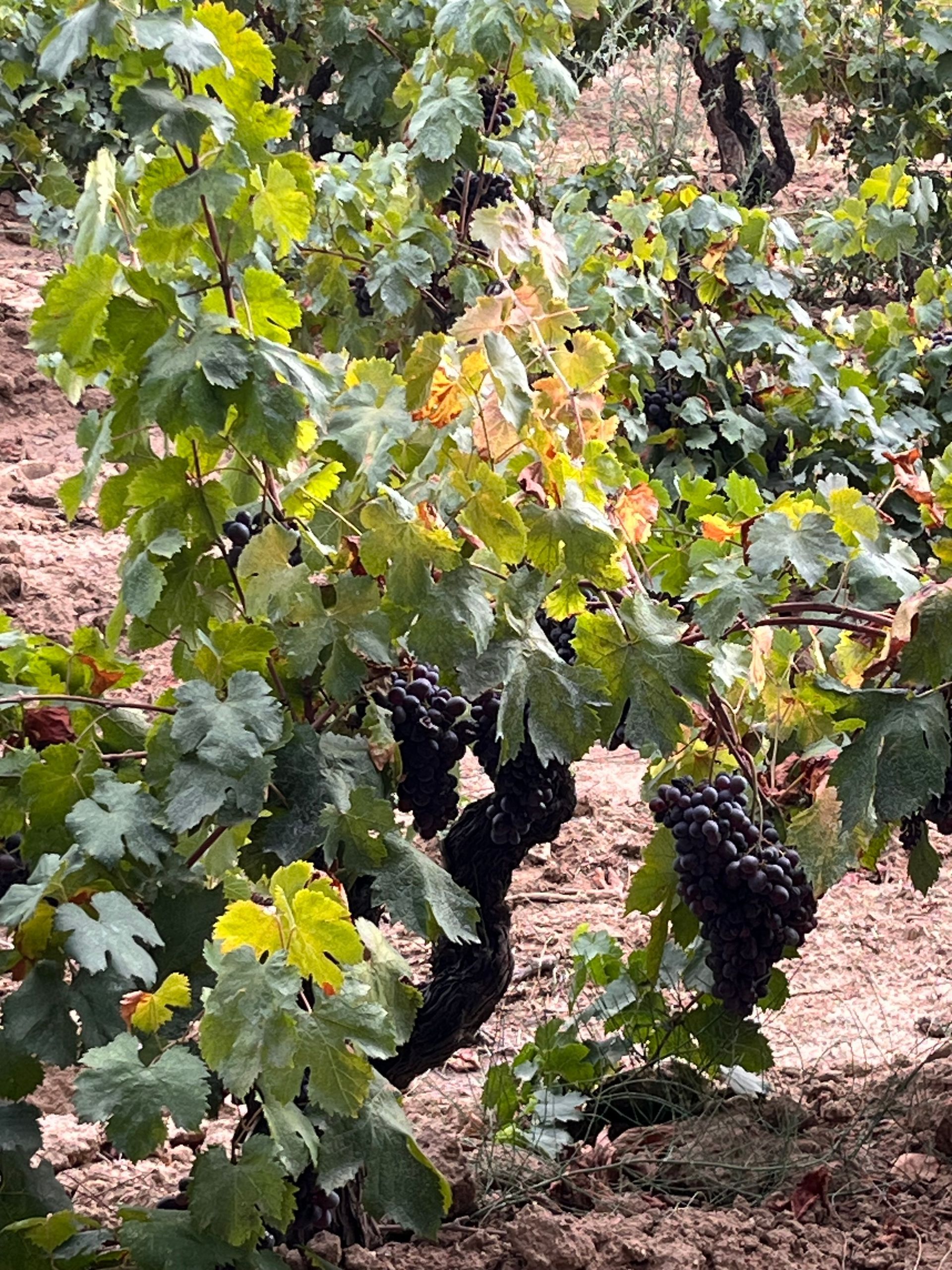
The grapevine is a long-lived woody climber in the Vitaceae family. Its twisting tendrils, broad leaves and hanging clusters have been part of cultivated landscapes for thousands of years, from Western Asia and the Mediterranean to vineyards across Europe and, eventually, much of the world.
Within this single species are thousands of cultivated varieties. Some were selected for large, sweet table grapes; some for drying into raisins; some for pressing; and others for their colour, acidity, flavour or ability to thrive in a particular climate. Those differences are not merely culinary. They help determine which medicinal compounds are present and where they are concentrated.
Green or “white” grapes contain flavonols and phenolic acids but little anthocyanin pigment. Red, purple and black grapes store anthocyanins mainly in their skins, which is why the flesh of most dark grapes remains pale when the berry is cut. The unusual
teinturier grapes are coloured differently: both their skins and their pulp are red. Certain teinturier cultivars also produce the uniformly dark-red leaves required for pharmacopoeial red vine leaf.
Pips create another important divide. Seeded grapes contain a naturally concentrated store of catechins and procyanidins. Seedless table grapes may still provide coloured skins and other polyphenols, but they cannot supply grape-pip medicine. Rather than asking which grape is “best”, it is more useful to ask what we want from the vine.
The whole grape: medicine on the table
Fresh grapes are first and foremost a food, but food can still have medicinal value. They provide water, potassium, organic acids and fibre, with much of their polyphenol content held in the skin and, when present, the pips. Dark grapes add anthocyanins—the red, purple and blue pigments also found in berries—while seeded grapes bring additional astringent compounds.
Their strength lies in this complete food matrix. The sugars arrive with water, fibre and a complex mixture of plant constituents rather than as an isolated compound. Grapes can therefore be a useful part of a varied, heart-conscious diet, particularly when they replace highly refined sweets and snacks.
Human studies of whole grape products have explored blood pressure and vascular function. A 2023 review of 30 randomised trials found a small average reduction in systolic blood pressure, with the most encouraging results seen in whole forms such as grapes, raisins and grape powder. This does not turn grapes into a treatment for hypertension, but it supports their place among the colourful plant foods that help care for cardiovascular health over time.
Raisins belong to the same family of food medicine, although drying changes the portion dramatically. With most of the water removed, sugars, energy and plant compounds are packed into a much smaller volume. A handful of raisins is not nutritionally equivalent to a handful of fresh grapes.
The skin: the vine’s protective shield
The skin is where a grape meets the outside world. It protects the berry from sunlight, physical damage and microorganisms, and many of its best-known compounds are part of that defence system.
In dark grapes, anthocyanins give the skin its jewel-like colour. Flavonols contribute further antioxidant and protective activity. Stilbenes—including resveratrol and its related glycosides—are produced in response to environmental stress. Their levels vary with the grape variety, ripeness, climate, sunlight, fungal pressure, harvesting and processing. This is why skin colour alone cannot tell us exactly how much resveratrol a grape contains.
Grape skins are used today in pomace powders and concentrated polyphenol extracts. Pomace is the mixture of skins, pips and other solids left after pressing. Once treated as little more than a by-product, it is now recognised as a valuable source of plant compounds for food, nutritional and pharmaceutical preparations.
Resveratrol may be the celebrity molecule of grape skin, but the skin is more interesting than any one constituent. Its anthocyanins, flavonols, phenolic acids and stilbenes work as a natural chemical community. Modern extracts may be characterised for one group of compounds, yet the original material remains a broad-spectrum plant matrix.
Research continues into grape-skin polyphenols in vascular health, inflammation, oxidative stress and healthy ageing. Their most established current role is as an ingredient in characterised polyphenol preparations rather than as a stand-alone medicine for a single disease.
The pips: small, bitter and concentrated
Grape pips are easy to discard, but their bitterness is a clue to their chemistry. They are rich in catechin and epicatechin, along with chains of related compounds called
procyanidins or
proanthocyanidins. These polyphenols account for the pips’ dry, mouth-puckering astringency.
Today the pips give rise to two very different products. Grape-seed oil comes from the fatty portion and is rich in unsaturated fats, especially linoleic acid. It is used chiefly as a culinary and skincare oil. Grape-seed extract is made to concentrate the polyphenols instead, particularly the procyanidins. The oil and the extract may share an origin, but they do not share the same composition or purpose.
Standardised grape-seed extracts are used for vascular and antioxidant support. Their procyanidins have been studied for effects on blood-vessel tone, endothelial function, capillary integrity and oxidative stress. Clinical research has also examined their influence on blood pressure. In a double-blind trial involving adults with prehypertension, a defined grape-seed extract taken for six weeks reduced blood pressure during the treatment period, with values moving back towards baseline after it was stopped.
This is where pharmaceutical preparation matters. A standardised extract supplies a measured concentration of procyanidins; eating a few whole pips does not reproduce that dose. The medicinal product is not simply the raw seed but the carefully prepared, characterised extract.
The juice: what changes when the grape is pressed
Juice looks like a simple extension of the fruit, but pressing changes the way the grape reaches the body. Water, sugars, acids and soluble plant compounds move into the liquid, while much of the fibre remains behind with the skins and pips.
Purple grape juice can carry anthocyanins and other phenolics from dark skins, especially when the juice has remained in contact with them during processing. Cultivar, temperature, filtration, clarification and storage all shape the final drink, which is why two grape juices may differ greatly in colour and polyphenol content.
Grape juice has been studied for its effects on blood vessels, platelet activity and antioxidant status. It can provide a useful food-based source of polyphenols, but it also delivers natural sugars quickly and without the intact fibre of the whole fruit. In everyday nutrition, whole grapes are therefore usually the more balanced choice. Juice has its own place—as a measured drink or nutritional preparation—but it should not be mistaken for fruit in liquid form.
Red vine leaf: the vine becomes a medicine
Of all the materials obtained from Vitis vinifera, red vine leaf has the clearest identity as a European herbal medicine. Known in France as
vigne rouge, it is used particularly for the discomfort of poor venous circulation: heavy, tired or aching legs, swelling, tension, itching and calf cramps.
Medicinal red vine leaf is not simply any grape leaf collected after it changes colour in autumn. The French Pharmacopoeia specifies the dried leaves of teinturier cultivars that bear black grapes with red pulp. The leaves must be uniformly dark red and meet defined minimum levels of total polyphenols and anthocyanosides. The cultivar, harvest time, colour and chemical quality are all part of the medicine’s identity.
The leaves contain flavonoids, anthocyanins and proanthocyanidins that act particularly on the venous microcirculation. They help support the delicate lining and connective tissues of small blood vessels, reduce excessive capillary permeability and limit the movement of fluid into the surrounding tissues. In practical terms, this can mean less pooling, swelling and discomfort in the lower legs.
The European Medicines Agency recognises a defined dry aqueous extract of red vine leaf for chronic venous insufficiency. In a placebo-controlled clinical trial, people taking the extract for 12 weeks experienced a modest reduction in lower-leg swelling and some improvement in pain. Traditional forms of red vine leaf, including infusions, also have a long-standing European use for minor venous circulatory symptoms and capillary fragility.
A medicinal history more than 3,500 years old
People cultivated grapes long before they began writing medical books, so there can be no single date for the vine’s first medicinal use. The earliest clear written evidence comes from ancient Egypt. The
Ebers Papyrus, compiled around 1550 BCE, includes grapes or raisins and grape-derived liquids among its medicinal ingredients. This places the grapevine within recorded pharmacy more than three and a half millennia ago.
Greek physicians later made distinctions that still feel surprisingly modern. The
Hippocratic writings differentiated ripe grape products from the sharply astringent juice of unripe grapes, selecting them for different effects. In the first century CE,
Dioscorides discussed ripe grapes, raisins and unripe juice, while
Pliny the Elder recorded medicinal uses of the fruit, skins, leaves and other parts of the vine.
These early writers did not know about anthocyanins, stilbenes or procyanidins, but they understood something fundamental: the vine was not one uniform remedy. Ripeness mattered. Plant part mattered. Preparation mattered.
The pips, interestingly, were seldom described as an independent medicine in the ancient texts. Modern grape-seed extract belongs to a later chapter, made possible by extraction technology and the ability to identify, concentrate and standardise a particular group of compounds.
From an ancient vine to a modern pharmacy
The grapevine now occupies several worlds at once. Whole grapes and raisins belong to nutritional medicine. The skins supply anthocyanin- and stilbene-rich materials. The pips are the source of procyanidin extracts and a separate culinary oil. Juice offers soluble polyphenols in a low-fibre liquid form. Authenticated red vine leaf has a recognised role in European herbal medicine for venous symptoms.
What links them is not a promise that every grape product does everything. It is the more interesting truth that a single plant can develop specialised chemistry in each of its parts—and that medicine changes when we choose a different part, variety or preparation.
The grapevine has travelled with us from the earliest written remedies to the modern pharmacopoeia. We may understand its chemistry in far greater detail today, but the enduring lesson is beautifully simple: look closely at the plant, because every part has its own story to tell.
A brief note on safe use
Whole grapes and juice contribute to total carbohydrate intake, which matters particularly for people managing diabetes or insulin resistance. Concentrated grape-skin and grape-seed products should be checked alongside anticoagulant, antiplatelet, blood-pressure and glucose-lowering medicines, and before surgery.
Red vine leaf is intended for appropriate venous symptoms, not unexplained swelling. Sudden one-sided swelling, redness, heat or severe pain—and any swelling accompanied by chest pain or breathlessness—requires urgent medical assessment. Persistent swelling should also be investigated rather than self-treated. The safety of medicinal red-vine-leaf preparations during pregnancy and breastfeeding has not been established.
Disclaimer
This article is for education and does not replace individual medical assessment or treatment. Historical uses are included as documentary evidence, not as instructions for reproducing ancient remedies.
References
- European Medicines Agency. European Union herbal monograph on Vitis vinifera L., folium, Revision 1. EMA/HMPC/464684/2016.
EMA monograph.
- Agence nationale de sécurité du médicament et des produits de santé. Pharmacopée française: Vigne rouge (1996).
French Pharmacopoeia monograph.
- Organisation Internationale de la Vigne et du Vin. Liste des descripteurs OIV pour les variétés et espèces de Vitis, 3rd ed. OIV-VITI 702-2023.
OIV.
- Rabe E, Stücker M, Esperester A, Schäfer E, Ottillinger B. Efficacy and tolerability of a red-vine-leaf extract in patients suffering from chronic venous insufficiency: results of a double-blind placebo-controlled study. Eur J Vasc Endovasc Surg. 2011. doi:10.1016/j.ejvs.2010.12.003.
- Ashoori M, Soltani S, Kolahdouz Mohammadi R, et al. The effect of whole grape products on blood pressure and vascular function: a systematic review and meta-analysis of randomized controlled trials. Nutr Metab Cardiovasc Dis. 2023;33(10):1836–1848. doi:10.1016/j.numecd.2023.05.001.
- Park E, Edirisinghe I, Choy YY, Waterhouse A, Burton-Freeman B. Effects of grape seed extract beverage on blood pressure and metabolic indices in individuals with pre-hypertension: a randomised, double-blinded, placebo-controlled trial. Br J Nutr. 2016;115(2):226–238.
PubMed.
- Romero-Pérez AI, Lamuela-Raventós RM, Andrés-Lacueva C, de la Torre-Boronat MC. Method for the quantitative extraction of resveratrol and piceid isomers in grape berry skins. J Agric Food Chem. 2001;49(1):210–215. doi:10.1021/jf000745o.
- Shi J, Yu J, Pohorly JE, Kakuda Y. Polyphenolics in grape seeds—biochemistry and functionality. J Med Food. 2003;6(4):291–299. doi:10.1089/109662003772519831.
- Popko L, Sinclair A, translators. Papyrus Ebers—Translation and Commentary. Science in Ancient Egypt. Ebers 291 and 479.
- Hippocrates. On Ulcers, Parts 5 and 9. Translated by Francis Adams.
- Dioscorides P. De Materia Medica, Book V. Translated by John Goodyer; edited by Robert T. Gunther.
- Pliny the Elder. Natural History, Book XXIII. Translated by W. H. S. Jones.