There is a story about goldenrod that says as much about people as it does about plants.
In sixteenth-century London, imported goldenrod fetched a handsome price. Apothecaries sold the dried herb for half a crown an ounce, and customers paid without complaint. Then someone found it growing closer to home, in Hampstead Wood, and its value collapsed.
John Gerard grumbled about the change in his Herball of 1597. The plant had lost none of its medicinal qualities. It had simply become familiar. What people treasured when it arrived from abroad, they overlooked when it grew on their doorstep.
Goldenrod deserves a second look. Its yellow flowers brighten the closing weeks of summer, but their beauty is only the surface. Behind them lies a long partnership with medicine: a plant used to tend wounds, support the kidneys and bladder, and soothe inflamed, irritated tissues.
A herb for making whole
European Goldenrod,
Solidago virgaurea, has a particularly strong place in the European herbal tradition. Other medicinal goldenrods include Solidago canadensis and Solidago gigantea, and research into these species has explored their chemistry and antibacterial activity, a sign of wider medicinal interest in the genus.
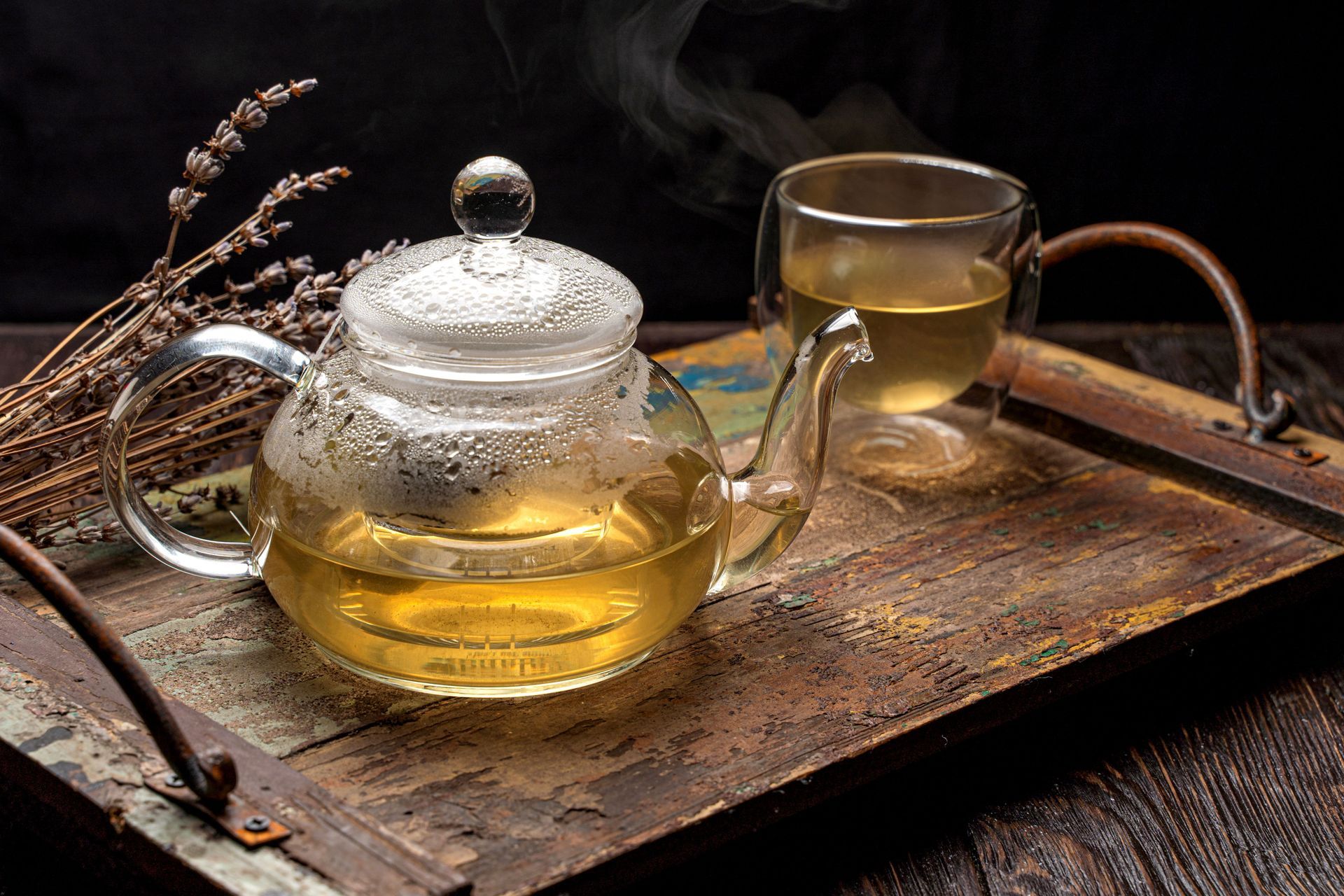
One of goldenrod's oldest recorded reputations is as a wound herb. In the seventeenth century, Nicholas Culpeper called it "a sovereign wound herb, inferior to none". His account also shows us how it was prepared. Fresh or dried goldenrod was simmered into a decoction, which could be taken internally or applied externally. He recommended it for wounds, bruises and bleeding, and as a wash for sores of the mouth and throat. His entry links goldenrod, too, with encouraging the flow of urine and the passage of urinary gravel and stones.
These were practical medicines made from the plant itself: water, heat, and fresh or dried herb.
Goldenrod belonged to household medicine as well as the printed herbals. In his Description of the Western Islands of Scotland (1703), Martin Martin recorded people on Lewis working goldenrod into fresh-butter ointments for newly sustained wounds. Here is the plant in everyday life, gathered and prepared by people who knew their own landscape.
Across these accounts a pattern emerges. Goldenrod was valued for injured tissues, irritated surfaces and urinary difficulties, and those themes still run through its use in herbal medicine today.
What goldenrod does
Goldenrod brings several medicinal actions together: anti-inflammatory, antibacterial, diuretic and astringent.
Its diuretic action encourages the production and flow of urine, which underpins its long place in kidney and bladder care. Its astringency, the tightening action associated with tannin-containing herbs, helps explain its traditional use on irritated tissues, in wound washes and for excessive catarrh.
Its anti-inflammatory character widens the picture considerably. Goldenrod's relevance reaches beyond the urinary tract to inflamed mucous membranes and musculoskeletal complaints. Animal studies have shown anti-inflammatory effects, and laboratory studies have documented antibacterial activity in goldenrod extracts.
These actions explain why herbalists reach for the same plant in such different circumstances. A bladder preparation, an ointment and a prescription for upper respiratory catarrh each draw on a different side of its character.
From the bladder to the joints
Goldenrod remains an important herb in urinary medicine. Its traditional applications include cystitis, urinary irritation and support for the passage of gravel and small urinary deposits.
The link with joint health is also worth exploring. The kidneys help regulate the excretion of uric acid, and when it accumulates and forms crystals in the joints, it can provoke the fierce inflammation of gout.
In a 2021 study, an extract of Solidago virgaurea lowered raised blood uric acid by increasing its excretion through the kidneys. It also reduced experimentally induced swelling. These were animal experiments, but they suggest an intriguing biological bridge between goldenrod's urinary actions and its place in the care of inflammatory joint complaints.
For herbalists, this relationship between elimination and inflammation is familiar ground. Goldenrod invites us to consider both the affected tissues and the processes that influence them.
A place in respiratory and throat care
Goldenrod's affinity with mucous membranes also earns it a place in upper respiratory care.
Herbalists use it for catarrh and congestion of the nose, sinuses and upper throat, including rhinitis and sinusitis. Its astringency is particularly relevant where excessive secretions accompany persistent irritation, while its anti-inflammatory action contributes to the wider therapeutic picture.
That brings us back to the mouth and throat washes of the old herbals, and to an intriguing corner of modern research. In a laboratory study published in 2012, water extracts of goldenrod interfered with Candida albicans as it changed into its filamentous form and formed biofilms, the attached communities that help microorganisms persist on surfaces. The extracts affected this behaviour without simply suppressing all microbial growth.
It is a fascinating glimpse of how a plant preparation can work. Influencing how microbes attach and behave opens another avenue for understanding goldenrod's relationship with tissue surfaces.
The preparation matters
Researchers have identified constituents in Goldenrod including rutin, chlorogenic acid and caffeic acid. Its chemistry helps explain why the method of preparation deserves attention. Water and alcohol draw out different proportions of plant constituents, and studies comparing goldenrod infusions, decoctions, macerations and tinctures have examined differences in flavonoid extraction and antioxidant activity.
Herbalists work with this every day. Choosing a tea, a tincture or a topical preparation is part of choosing how to use the plant.
Goldenrod at Wildberry Clinic
At Wildberry Clinic, goldenrod has a place in both internal prescriptions and external preparations. We use it in individually tailored care for urinary tract infections, cystitis and urinary irritation, drawing on its anti-inflammatory, antibacterial and diuretic actions. It also features in care for people with kidney and urinary calculi or gravel, following its long use in supporting urinary flow and the passage of small deposits.
We consider it in overactive bladder care too, choosing its role and preparation according to the cause of urgency and frequency and the wider clinical picture. Its use extends to upper respiratory congestion, rhinitis, sinusitis and throat infections, including the catarrh that accompanies colds and flu. Here we draw on its anti-inflammatory and astringent character to calm irritated mucous membranes and excessive secretions.
Goldenrod also features in our approach to musculoskeletal inflammation and rheumatic complaints. Externally, we work it into ointments for wound care and skin irritation, continuing its long history as a herb for tending damaged and sensitive tissue.
The prescription follows the person and the condition. Our NIMH-registered clinical herbalists consider medical history, medicines and relevant investigations, working alongside GPs, consultants and physiotherapists.
Bringing goldenrod closer to home
If you would like to grow it, choose by botanical name. European goldenrod, Solidago virgaurea, is a clump-forming perennial that thrives in a sunny position and well-drained soil.
There is a quiet satisfaction in giving a medicinal plant a place in the garden: seeing the first shoots, watching the flowers open, and knowing how it becomes medicine.
Gerard's complaint still rings true. We are quick to admire a remedy that comes from far away and slow to notice the one growing nearby.
Goldenrod asks us to pay attention. Its history belongs to apothecaries, herbalists and households; its present belongs to living herbal practice and continuing research. Those yellow flowers carry a far richer story than their familiarity suggests.
Herbal treatment is individually tailored. Fever, pain in the side or back, blood in the urine, or suspected urinary obstruction require prompt medical assessment.
Herbal treatment is individually tailored. Fever, pain in the side or back, blood in the urine, or suspected urinary obstruction require prompt medical assessment.
References
Historical sources
- Gerard, J. (1597). The Herball, or Generall Historie of Plantes. London: John Norton. Goldenrod entry. The account of its changing price and discovery near London is also discussed in Knight below.
- Knight, L. (2009). Of Books and Botany in Early Modern England: Sixteenth-Century Plants and Print Culture. Ashgate, pp. 90–91.
womengovtcollegevisakha.ac.in
- Culpeper, N. (1850 edition). The Complete Herbal, incorporating The English Physician Enlarged. London: Thomas Kelly. “Golden Rod” entry.
www.gutenberg.org
- Martin, M. (1703). A Description of the Western Islands of Scotland. “The Isle of Lewis”: household use of goldenrod in ointments for wounds.
www.undiscoveredscotland.co.uk
Research
- Tămaș, M., Vostinaru, O., Soran, L., et al. (2021). Antihyperuricemic, anti-inflammatory and antihypertensive effect of a dry extract from Solidago virgaurea L. (Asteraceae). Scientia Pharmaceutica,
89(2), 27.
doi:10.3390/scipharm89020027.
mdpi-res.com
- Kołodziej, B., Kowalski, R., & Kędzia, B. (2011). Antibacterial and antimutagenic activity of extracts aboveground parts of three Solidago species: Solidago virgaurea L., Solidago canadensis L. and Solidago gigantea Ait. Journal of Medicinal Plants Research,
5(31), 6770–6779.
doi:10.5897/JMPR11.1098.
academicjournals.org
- Chevalier, M., Medioni, E., & Prêcheur, I. (2012). Inhibition of Candida albicans yeast–hyphal transition and biofilm formation by Solidago virgaurea water extracts. Journal of Medical Microbiology,
61(7), 1016–1022.
doi:10.1099/jmm.0.041699-0.
Microbiology Society
- Apáti, P., Szentmihályi, K., Kristó, Sz. T., et al. (2003). Herbal remedies of Solidago—correlation of phytochemical characteristics and antioxidative properties. Journal of Pharmaceutical and Biomedical Analysis,
32(4–5), 1045–1053.
PubMed
Herbal practice and cultivation
- The Naturopathic Herbalist. (n.d.). Solidago virgaurea. Practitioner monograph describing traditional urinary and upper respiratory applications.
Read the monograph.
The Naturopathic Herbalist
- Royal Horticultural Society. (n.d.). Solidago virgaurea: plant profile and cultivation guidance.
www.rhs.org.uk
Disclaimer
This article is for education and shares traditional herbal knowledge, research and clinical practice. Herbal treatment is individually tailored, with the choice of preparation and dose guided by medical history, medicines and relevant investigations. Seek professional advice before self-treating urinary infections or suspected stones. Fever, pain in the side or back, blood in the urine, difficulty passing urine, or rapidly worsening symptoms require prompt medical assessment. Do not change prescribed treatment without consulting your healthcare professional.