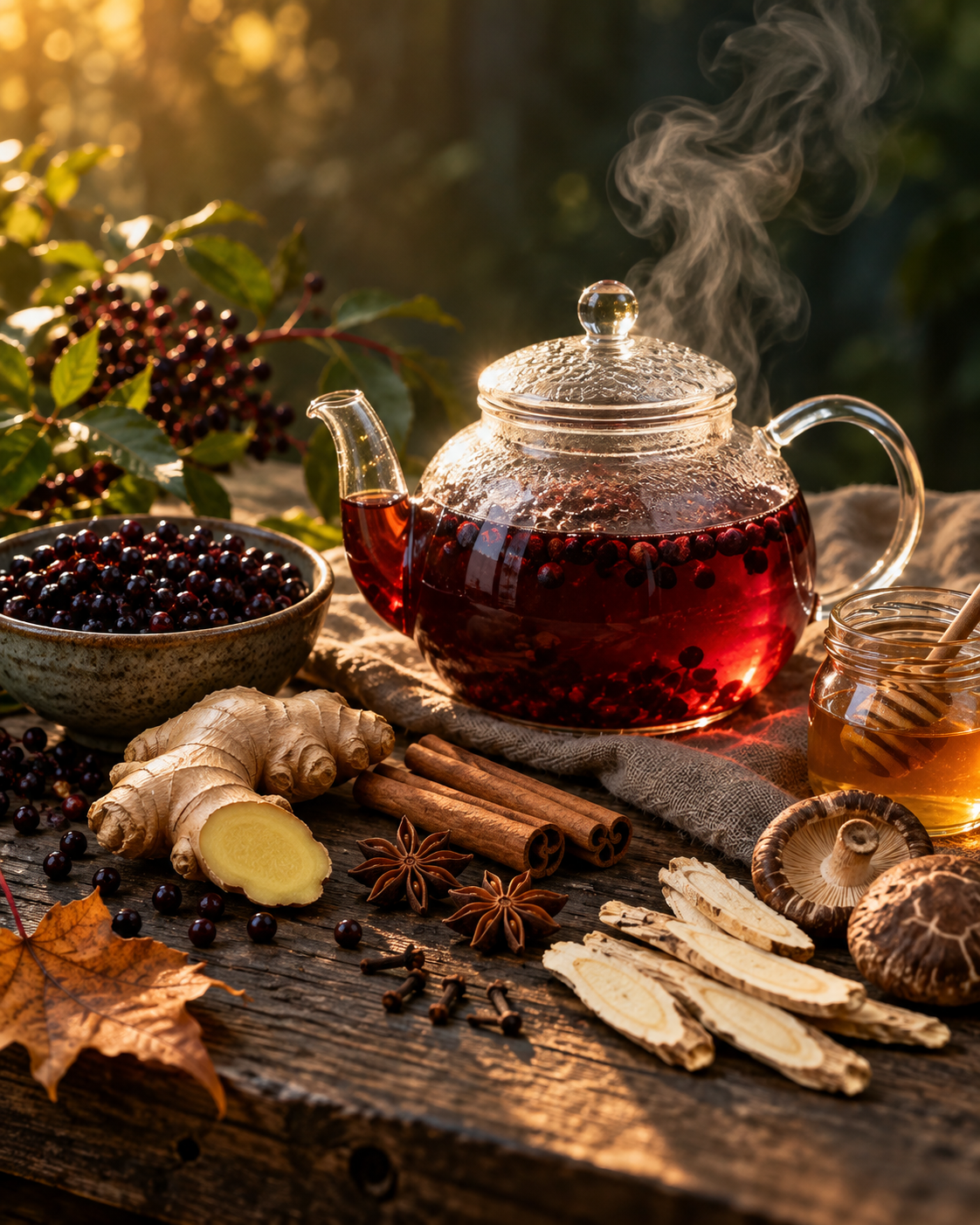
When the first cold of autumn arrives, most of us reach for whatever is in the cupboard. A herbalist starts with a question instead:
what kind of cough is this?
The answer shapes everything that follows, and it's why one herbal tea can't be the right choice for everyone.
Your airways already know what they're doing
Your airways are lined with mucus and tiny moving hairs called cilia, which sweep debris out of the lungs. Coughing is part of that defence system, so the aim isn't always to switch it off. The aim is to help it work again.
Trouble starts when tissues become inflamed, mucus thickens, or coughing turns into a repetitive, exhausting habit. At that point, a herbalist looks at the pattern: irritation, mucus, spasm, and how well the person is recovering. The examples and tea below are our own application of that approach.
Four jobs a herbal blend can do
1. Soothe the irritation. For a dry, tickly cough and a raw throat, herbalists reach for demulcents. Marshmallow root is rich in mucilage, which forms a soft, soothing gel in water. Mullein flower is traditionally used for sore throats with dry coughs. Liquorice brings soothing and expectorant qualities, plus natural sweetness.
2. Help clear the mucus. Expectorants support the clearance of secretions. Thyme, Aniseed and Fennel all have recognised traditional uses for coughs that come with colds. Depending on the pattern, a herbalist might also consider Elecampane or a suitable Ivy preparation.
3. Calm the bouts. When coughing comes in spasms, antispasmodic actions are here to bring a relief. Thyme plays this role as well as being an expectorant. Easing an irritated throat also reduces the urge to cough in the first place.
4. Look after recovery. Echinacea is a familiar name in the cold season. A herbalist weighs the species, the plant part and the preparation, and looks beyond the herbs to sleep, appetite, hydration and recurring infections.
Why we blend
One herb rarely covers every job. Our tea pairs Thyme with Liquorice for respiratory support and throat comfort.
Aniseed and Fennel add expectorant and digestive qualities, while Echinacea
brings the immunomodulatory touch.
Ginger and
Ceylon Cinnamon add warmth and flavour. It's a warming, aromatic, lightly sweet cup, and every ingredient earns its place.
Warming Throat And Cough Tea
Makes about 100 g of dried blend
Ingredients:
Thyme herb (Thymus vulgaris) 25 g
Liquorice root, finely cut (Glycyrrhiza glabra) 20 g
Echinacea flowering aerial parts (Echinacea purpurea) 15 g
Aniseed (Pimpinella anisum) 15 g
Sweet Fennel seed (Foeniculum vulgare var. dulce) 15 g
Ceylon Cinnamon bark, finely cut (Cinnamomum verum) 5 g
Dried Ginger, finely cut (Zingiber officinale) 5 g
To make it: Mix the herbs thoroughly and store in a labelled airtight container, away from heat, light and moisture. Give the jar a gentle turn before each use, as the seeds settle.
To brew: Use about 2–3 g of blend per 250 mL of freshly boiled water, which is roughly a level tablespoon. Weigh your first spoonful to see how it compares, and never go above 5 g per cup. Lightly crush the seeds, cover, steep for 15–20 minutes, then strain. Make it fresh each time.
How much: One cup as needed, up to three cups a day, for a few days.
A short safety note
This blend is for short-term adult use. Avoid in pregnancy or breastfeeding, high blood pressure, heart or kidney disease, low potassium, or relevant plant allergies. Check suitability if taking medicines or living with an autoimmune condition; do not combine with other liquorice remedies without advice. Omit ginger if it aggravates reflux. Seek assessment if symptoms worsen or fail to improve after a week, or a cough lasts over three weeks. Breathlessness, chest pain or coughing blood need prompt medical attention.
Further reading
1. Bone K, Mills S. Principles and Practice of Phytotherapy: Modern Herbal Medicine. 2nd ed. Elsevier, 2013. Respiratory-system clinical guide. The tea is a Wildberry formulation.
2–7. European Medicines Agency herbal monographs: Althaeae radix; Verbasci flos; Liquiritiae radix; Thymi herba; Anisi fructus; Foeniculi dulcis fructus. ema.europa.eu/en/medicines/herbal
8. NCCIH. Echinacea. nccih.nih.gov/health/echinacea
9. HSE. Cough. www2.hse.ie/conditions/cough/
See your GP if your cough lasts longer than about three weeks, or you have blood in your phlegm, breathlessness, wheezing, fever or night sweats, or no improvement after about a week.