From Plant to Prescription: Monarda. The Herb That Hummed Our Wildberry Garden to Life
Written by N. Streawbridge| 29 April 2026
Three North American species, their Indigenous uses, aromatic chemistry and place in modern herbal medicine.
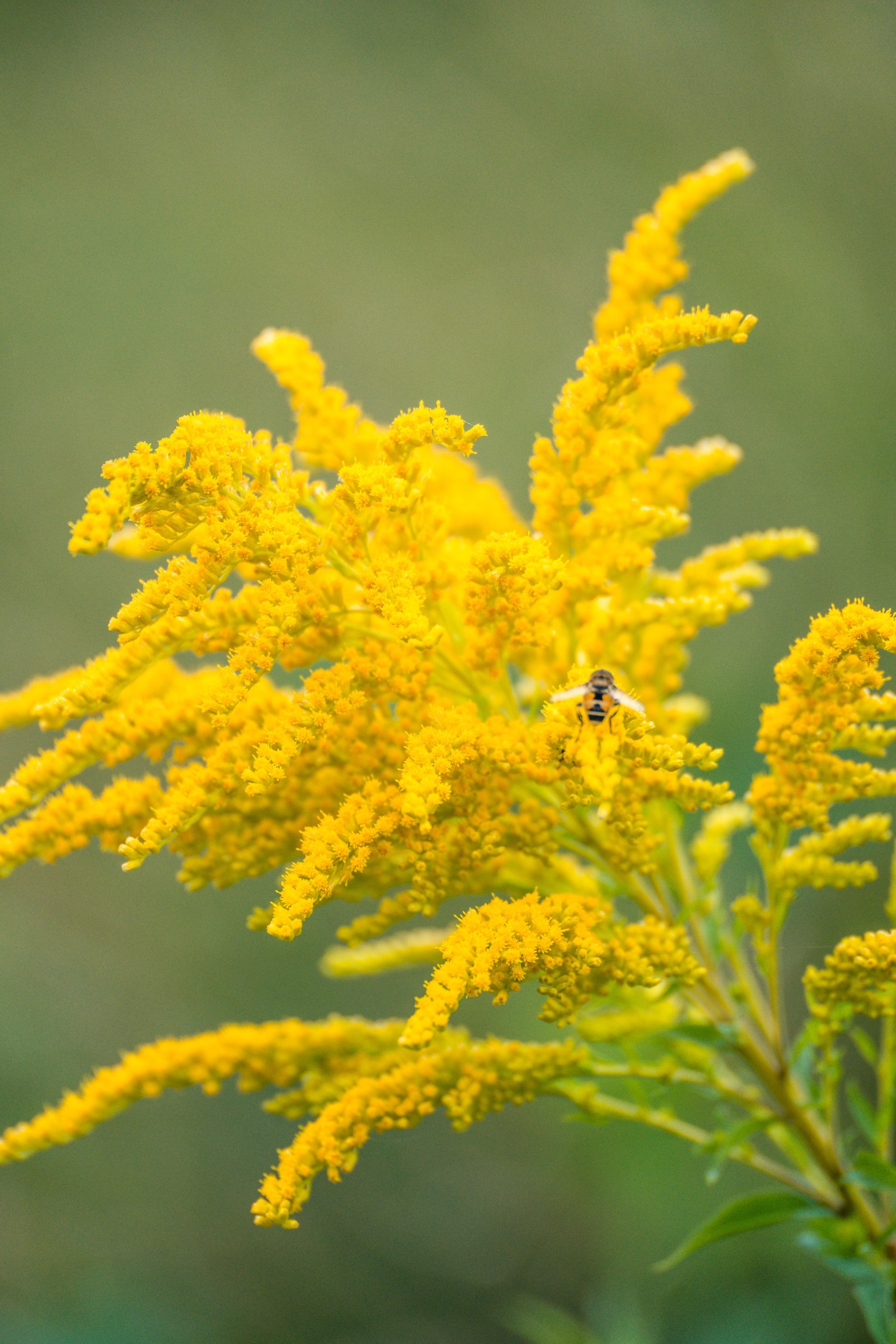
This summer, one plant changed the sound of the Wildberry medicinal garden. Above its slender stems, rings of lavender-purple flowers rose one above another like small botanical towers. As soon as they opened, the whole patch began to hum. Bees moved constantly between the tiers, disappearing into the tubular flowers and emerging dusted with pollen. It was difficult to pass without stopping to watch.
This was Monarda citriodora—lemon bee balm—and its arrival in the garden opened a much larger story. Monarda is not simply an attractive pollinator plant, nor is it one interchangeable medicinal herb. It is a distinctly North American genus whose different species became foods, drinks and medicines within different landscapes and cultural traditions.
Our purple-flowered plant led us to two of its best-known relatives: Monarda fistulosa, or wild bergamot, with the most extensive surviving record of Indigenous medicinal use; and the scarlet Monarda didyma, the plant that became known as Oswego tea.
Their family resemblance is clear. All three belong to the mint family and carry aromatic compounds within their leaves and flowering tops. Yet their histories, chemistry and therapeutic emphasis are not identical. To understand the Monarda growing in our garden, we first have to allow each species to keep its own identity.
Three Monardas, three distinctive plants
Monarda citriodora: lemon bee balm
This is the species growing in our medicinal garden. Native to the central and southern United States and extending into northern and western Mexico, it is usually an annual or short-lived plant. Its most striking feature is its architecture: several flowering rings are arranged along the upper stem, each accompanied by pale green, pink or lavender bracts.
When the foliage is rubbed, its first impression can be fresh and lemon-like. As the plant matures, the aroma often becomes warmer, sharper and more reminiscent of oregano. That change is a sensory clue to its concentration of volatile aromatic compounds.
Monarda fistulosa: wild bergamot
Wild bergamot is a widespread perennial with lavender, mauve or occasionally pale flowers gathered into rounded terminal heads. Its natural range extends across a large part of North America, and its wide distribution is reflected in an exceptionally varied ethnobotanical record.
This is the species behind many of the respiratory, digestive, fever and topical uses now casually attributed to “bee balm” as a whole.
Monarda didyma: scarlet bee balm
The third species is difficult to mistake in flower. Monarda didyma carries brilliant scarlet heads above red-tinged bracts and naturally favours the moist soils of eastern North America. Its aromatic leaves and flowers became associated with the drink settlers called Oswego tea.
All three are pollinator plants; all three are aromatic; and all three have entered medicinal or culinary practice. But they entered by different routes.
Nanakopsi: “one perched above the other”
The earliest specific written record we located for Monarda citriodora appears in J. Walter Fewkes’s 1896 account of Hopi ethnobotany. The plant was recorded under the Hopi name nanakopsi, derived from words describing the flowers as sitting “one perched above the other.”
Anyone looking at its stacked flowering whorls can understand the precision of the name.
Fewkes wrote that nanakopsi was gathered by people taking part in a communal hare hunt. The plant was boiled and eaten specifically with hare. This is not recorded as a medicinal formula, but it is a valuable piece of direct cultural evidence: M. citriodora was not merely a fragrant wild plant. It had a recognised place in food and was paired with a particular meat.
The record is also a reminder of how carefully history must be handled. We cannot identify a single people who “first discovered” Monarda. Indigenous knowledge long predates the surviving written accounts, most of which were recorded by outsiders during the nineteenth and early twentieth centuries. The date of a publication tells us when a practice entered the written record—not when the knowledge began.
An earlier medical account offers another intriguing glimpse. In 1830, the botanist Constantine Samuel Rafinesque described a lemon-scented Louisiana Monarda, written as M. citrodora, as being frequently used as a pleasant stomachic tea. He also noted that the dried flowers were strongly sternutatory: when powdered and inhaled, they provoked sneezing.
His taxonomy predates modern botanical treatment, but the description clearly shows a lemon-scented Monarda already recognised as both a digestive drink and a strongly aromatic head-clearing herb.
Later regional accounts describe lemon bee balm tea for colds, coughs and fever. These uses are plausible within the wider Monarda tradition, but the surviving documentation is less precise about which Indigenous nation used M. citriodora in this way. They should therefore be presented as regional records rather than assigned to a particular people without evidence.
Monarda fistulosa: the richest medicinal record
The history of wild bergamot is far more detailed. Its wide distribution meant that it was encountered and used by many Indigenous nations, each within its own system of medicine and daily life.
Recorded preparations were remarkably varied. The Iroquois used it as a beverage. The Menominee steeped the leaves and flower heads as a tea for catarrhal illness. Among the Ojibwe, dried flowering tops were used during colds, while the whole herb could be boiled so that its aromatic vapours could be inhaled for bronchial and catarrhal complaints. Chewed leaves were also placed in the nostrils for headache.
The Meskwaki combined wild bergamot with other plants for colds, although the surviving summary does not identify the companion herbs. Rather than attempting to reconstruct a lost formula, it is more honest to preserve the limit of the record.
The Ho-Chunk incorporated the plant into sweat baths and inhaled its fumes during colds. The Teton Dakota boiled the leaves and flowers for abdominal pain. The Blackfoot prepared a tea from the blossoms and leaves for stomach pain and applied boiled leaves to pustular skin eruptions. A warm Cherokee poultice was recorded for headache, while the Tewa dried and powdered the plant for headache, fever, sore eyes and colds.
This was not one universal “Native American use.” It was a pattern of distinct local practices connected by the same aromatic plant: tea, vapour, sweat bath, powder and poultice. Taken together, they show Monarda occupying the boundary between respiratory medicine, digestive medicine and external treatment.
European settlers later adopted wild bergamot as a warming diaphoretic and carminative, using it for feverish illnesses, flatulent colic, nausea and vomiting. In nineteenth-century North American herbal medicine, Monarda became valued as an aromatic stimulant: a plant that could warm, move, disperse and settle at the same time.
Monarda didyma and Oswego tea
Scarlet bee balm followed a different cultural route. Its flowers or young leaves were infused in water to make the drink that became known to settlers as Oswego tea, following Indigenous use in the region now called Oswego, within Haudenosaunee homeland.
The early descriptions do not present Oswego tea as an elaborate multi-herb recipe. Some refer to tea made from the scarlet flowers; others specify the young aromatic leaves. Later preparations commonly used the leaves and flowering tops together.
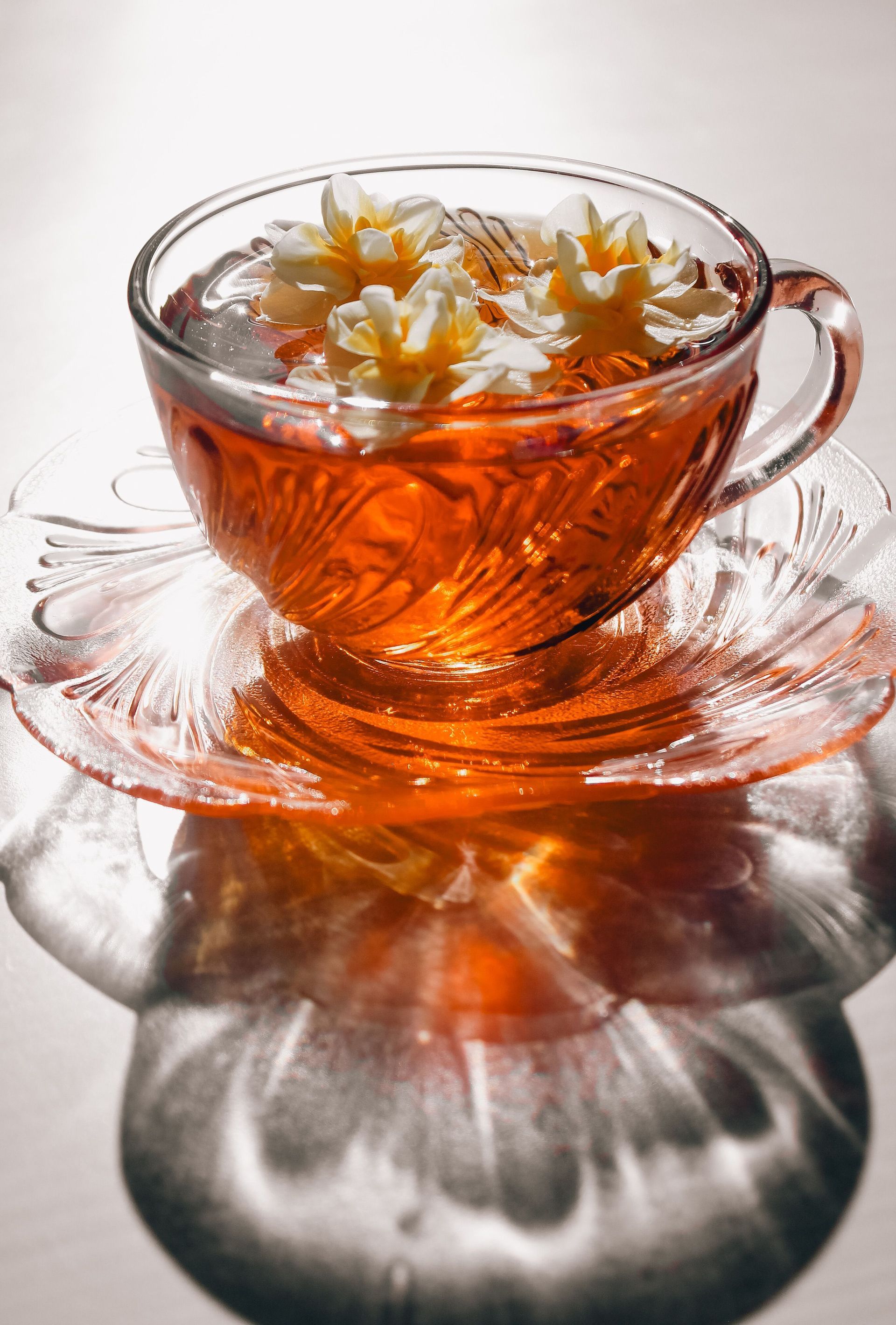
By the nineteenth century, British writers described the infusion being served with sugar and cream, in the manner of ordinary tea, and regarded it as both a pleasant aromatic beverage and a mild fever remedy. Honey, lemon, mint and black tea appear in modern recipes, but they should not be projected backwards into the original Indigenous preparation.
The frequently repeated story that colonists turned en masse to Oswego tea after the Boston Tea Party is attractive, but difficult to demonstrate from contemporary evidence. It is safer to say that Monarda was one of several North American plants adopted as an alternative to imported tea during the colonial and early national periods.
What creates the Monarda aroma?
Crush a leaf and the chemistry becomes immediately perceptible. Monarda stores volatile compounds in glandular structures on its aerial parts. In M. citriodora, the principal compounds often include thymol, carvacrol, p-cymene and gamma-terpinene.
Thymol and carvacrol are phenolic monoterpenes also familiar from thyme and oregano. They help explain Monarda’s warm, penetrating flavour and the antibacterial and antifungal activity observed in laboratory studies. P-cymene and gamma-terpinene contribute to the aroma and form part of the plant’s interconnected volatile chemistry.
There is, however, no single universal Monarda oil. One analysis of M. citriodora flower oil from plants grown in Kashmir found thymol at almost 80 per cent, while Italian-grown material contained approximately 20 per cent thymol alongside larger proportions of p-cymene, gamma-terpinene and carvacrol. Genetics, soil, climate, plant part and stage of harvest can all change the chemical balance.
This variability matters clinically. Two plants carrying the same Latin name may not smell, taste or act with precisely the same intensity. Organoleptic assessment—the colour, scent, taste and feel of the herb—is not an old-fashioned extra; it is part of understanding the material in front of us.
More than an essential oil
Monarda is sometimes discussed as if it were simply a container for thymol, but the whole herb is chemically broader than its volatile oil.
Analyses of flowering Monarda herbs have identified phenolic acids and flavonoids, including rosmarinic, chlorogenic, gallic and p-coumaric acids; luteolin and apigenin derivatives; naringenin; and related polyphenols. In M. citriodora, researchers have identified a characteristic profile that includes gallic acid, p-coumaric acid, hydroxybenzoic-acid derivatives and luteolin-7-glucoside alongside compounds shared with other members of the genus.
These polyphenols contribute antioxidant and inflammation-modulating possibilities that are not captured by studying the essential oil alone. They also help explain why an infusion, tincture and distilled oil cannot be treated as equivalent preparations. Hot water draws out a mixture of aromatic and water-soluble constituents; alcohol produces another chemical balance; distillation concentrates the most volatile fraction and leaves much of the polyphenol chemistry behind.
Recent laboratory research has found antioxidant activity and activity against several microorganisms in extracts or essential oils from Monarda species, with generally stronger effects against Gram-positive bacteria than Gram-negative organisms.
From chemistry to herbal actions
Seen through both tradition and chemistry, Monarda has a particularly coherent set of actions.
A warming aromatic digestive. Its pungent volatile compounds stimulate the senses and suit digestive discomfort characterised by fullness, gas, nausea or a sense of cold stagnation. Rafinesque’s description of lemon bee balm as a “stomachic tea” fits naturally with the later carminative use of other Monarda species.
A respiratory aromatic. Warm infusions and inhaled vapours bring volatile compounds into contact with the mouth, throat and upper airways. Traditional use concentrated particularly on colds with congestion, catarrh and a heavy or obstructed feeling rather than on dry irritation alone.
A warming diaphoretic. Taken hot, Monarda was used to encourage peripheral warmth and sweating during the early, chilled stages of feverish illness. This is one reason it sits so naturally beside elderflower, yarrow and ginger.
A topical and oral aromatic. Historical washes, poultices and applications for skin eruptions are consistent with the antimicrobial activity demonstrated for thymol- and carvacrol-rich preparations. A whole-herb wash is not equivalent to applying concentrated essential oil, which can irritate or damage the skin when used incorrectly.
A polyphenol-rich protective herb. Its flavonoids and phenolic acids add antioxidant activity to the more immediate warming and aromatic effects of the volatile fraction.
How we use Monarda citriodora at Wildberry
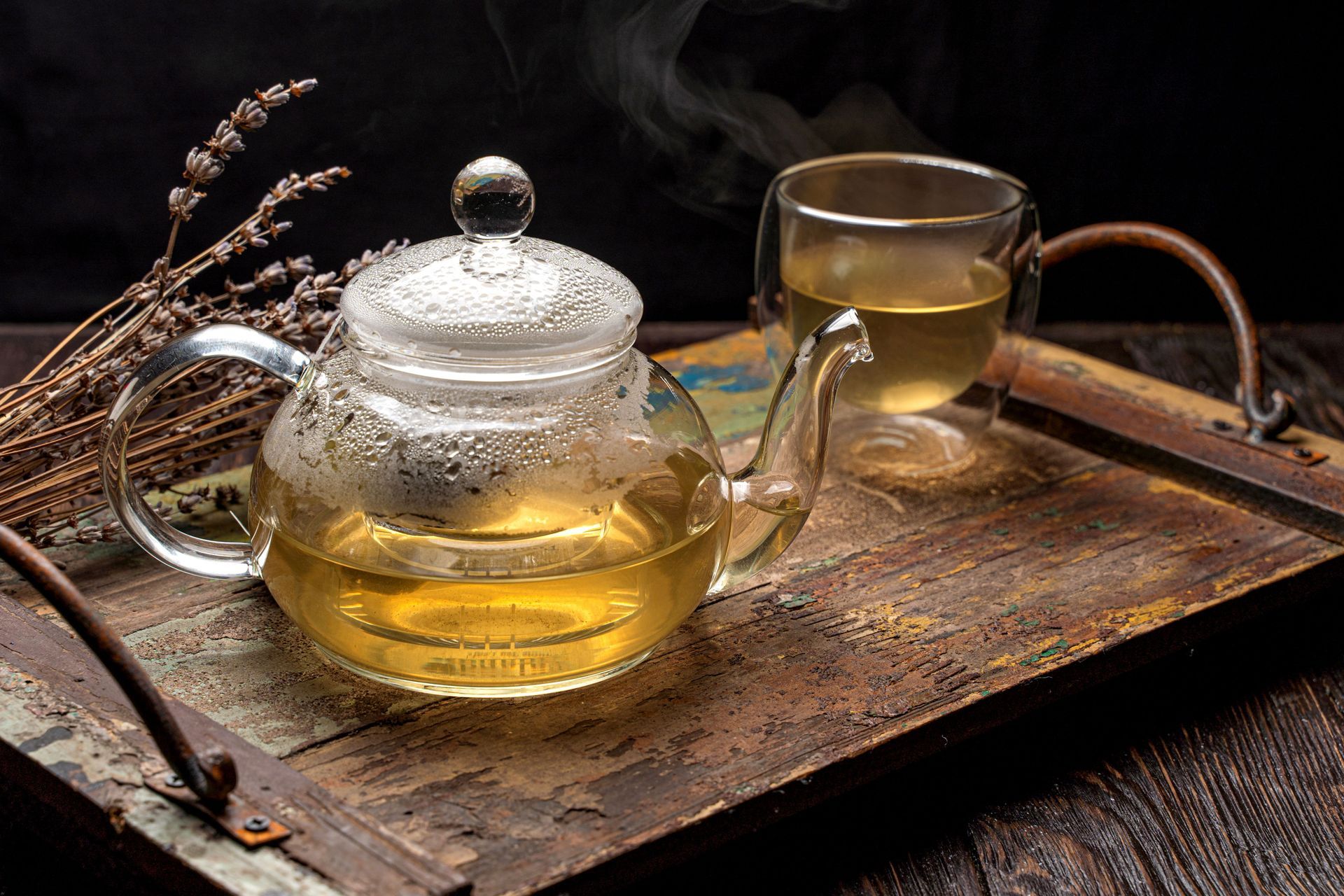
Our plant entered the dispensary through our seasonal autumn tea. Here, M. citriodora is not expected to do everything. It occupies a precise position within a wider formula.
Its warming aromatic character complements elderflower and yarrow, traditionally chosen when a seasonal illness begins with chilliness and poor peripheral warmth. Ginger reinforces circulation and digestive warmth, while peppermint lifts the flavour and supports comfortable digestion and breathing. Echinacea provides an immune-focused element, rosehip contributes its nutritive and polyphenol-rich character, and the gentler relaxing herbs help the body settle and rest.
The result is not an attempt to reproduce an Indigenous formula. It is a contemporary clinical pairing informed by Monarda’s documented history, its chemistry, its taste and the role required of it within the blend.
Beyond that formula, we might consider M. citriodora in three broad ways:
- In the early, chilly stage of a cold, alongside elderflower, yarrow or ginger.
- Where respiratory congestion accompanies digestive heaviness, with herbs selected for the individual presentation rather than from a fixed recipe.
- As a warming carminative where gas, post-meal fullness or nausea calls for something more pungent than a purely soothing digestive tea.
Its place is less obvious in a very hot, dry or irritated presentation, where strongly aromatic herbs may feel excessive and demulcent or cooling plants may be more appropriate. As always, the herb is selected for the person and the pattern—not simply for the name of a condition.``
The plant, the bees and the prescription
We first noticed Monarda citriodora because the bees made it impossible not to notice. They revealed one of the plant’s living relationships before we had explored any of its constituents or read a single historical record.
Following that plant from the garden led us across a much wider medicinal landscape: to Hopi nanakopsi cooked with hare; to wild bergamot prepared as tea, vapour, bath, powder and poultice; to the scarlet flowers and young leaves of Oswego tea; and finally back to our own dispensary, where lemon bee balm now contributes its warmth and aromatic intelligence to a modern seasonal formula.
The three Monardas are related, but they are not interchangeable. Their shared chemistry gives the genus a recognisable medicinal character; their different histories teach us to be precise.
And our own plant will always carry one additional association: the summer it hummed the Wildberry garden to life.
References
- Royal Botanic Gardens, Kew. Plants of the World Online: Monarda L.; Monarda citriodora Cerv. ex Lag.; Monarda fistulosa L.; Monarda didyma L.
- Fewkes JW. A Contribution to Ethnobotany. The American Anthropologist. 1896;9:14–21.
- USDA Natural Resources Conservation Service. Plant Guide: Wild Bergamot—Monarda fistulosa L. National Plant Data Center.
- Moerman DE. Native American Ethnobotany. Portland, Oregon: Timber Press; 1998. Native American Ethnobotany Database, BRIT.
- Rafinesque CS. “Monarda coccinea.” In: Medical Flora, or Manual of the Medical Botany of the United States of North America. Vol. 2. 1830.
- Meehan T. “Oswego Tea: Monarda didyma.” In: The Native Flowers and Ferns of the United States.
- Lawson SK, Satyal P, Setzer WN. The Volatile Phytochemistry of Monarda Species Growing in South Alabama. Plants. 2021;10(3):482. doi:10.3390/plants10030482.
- Wani AR, Yadav K. Chemical Characterization, Antimicrobial, Antiproliferative and Antioxidant Activities of the Essential Oil of Monarda citriodora Growing in Kashmir. International Journal of Pharmaceutical Investigation. 2021;11(2):170–175. doi:10.5530/ijpi.2021.2.31.
- Kozyra M, Biernasiuk A, Wiktor M, Kukula-Koch W, Malm A. Comparative HPLC–DAD–ESI-QTOF/MS/MS Analysis of Bioactive Phenolic Compounds Content in the Methanolic Extracts from Flowering Herbs of Monarda Species and Their Free Radical Scavenging and Antimicrobial Activities. Pharmaceutics. 2023;15(3):964. doi:10.3390/pharmaceutics15030964.
Disclaimer
This article is for education and does not replace individual medical assessment. The traditional use of a whole-herb infusion should not be confused with the internal or undiluted topical use of concentrated Monarda essential oil. Correct botanical identification, preparation, dose, health history, pregnancy or breastfeeding status, allergies and medicines should all be considered before therapeutic use.
Recent Posts