The days are shortening, the light is turning colder, and the trees are letting go of their leaves. If you've been feeling unusually flat, tired or low without quite knowing why, you're not alone.
For some people, the darker months bring a real shift in mood, energy, sleep and appetite. When this develops into depression that returns in a seasonal pattern, it is known as seasonal affective disorder (SAD). Typical features include difficulty waking, loss of motivation, poor concentration, increased appetite and a pull towards withdrawing from company. A passing autumn dip isn't necessarily SAD, but symptoms that persist deserve attention.
To understand the season's effect on us, it helps to look at two things: the biology inside us, and the way we live through autumn together.
When autumn drew people together
Long before electric light, the turn of the year was something people went through side by side. In Ireland, the end of the harvest was marked with small rituals: the cutting of the last sheaf, a shared meal, and decorated straw "harvest knots" given as tokens of courtship. Later, Samhain brought neighbours together for feasting, games and visiting as winter closed in. As the evenings darkened, there were firesides to gather around and good reasons to knock on a neighbour's door.
We can't know how many people then experienced seasonal depression, or claim that festivities prevented it. But these traditions offered things that matter for wellbeing: shared pleasure, a sense of belonging, and something to look forward to.
Autumn in a busy modern life
Today the days shorten while our schedules stay just as demanding. We may leave home before sunrise, spend the daylight hours indoors and return after dark. Work and screens stretch into the evening, and seeing friends means finding a gap in an already crowded diary. It is possible to spend a whole day answering messages and sitting in meetings with no relaxed conversation or shared meal.
This may compound seasonal vulnerability. It doesn't show that SAD is more common than it once was, but it is a good reason to look at how daylight, daily rhythms and connection fit into our lives.
Research shows how responsive our body clocks are to our surroundings. In a small study, a week of natural daylight and darkness while camping shifted participants' circadian timing earlier, compared with their usual electrically lit routines. It wasn't a treatment trial for SAD, but it showed that our light environment can substantially influence biological timing.
What happens inside the body?
Light reaching the eyes helps set the brain's central clock. That clock coordinates daily rhythms, including sleep and wakefulness and the release of melatonin, which signals biological night.
In some people with winter depression, this internal timing drifts out of step with their sleep schedule and daily demands. Circadian misalignment is supported by research as one contributor to SAD, though the pattern varies from person to person. That is why the timing of light exposure matters as well as the amount.
The immune system varies with the seasons too. Human studies have found seasonal changes in immune-cell composition and gene expression, with a more pro-inflammatory profile in winter in the European populations studied. This is more nuanced than saying immunity simply becomes "weaker" in the cold.
Mood and immunity: a two-way conversation
Our emotional experience can influence immune regulation. Research on perceived isolation has linked it with increased inflammatory gene activity and reduced activity in some antiviral pathways, with stress-related nervous-system signals appearing to play a part. Being alone and feeling lonely are not the same thing; what matters is whether we feel connected and supported.
The influence also runs the other way. In a randomised study of 115 healthy adults, an experimentally induced inflammatory response raised inflammatory cytokines alongside low mood and feelings of social disconnection. This shows that immune activity can shape emotional experience, although a temporary experimental response is not the same as SAD.
Research in SAD itself offers a further clue. A small study found higher inflammatory activity alongside lower lymphocyte proliferation in people with winter depression. In a subgroup reassessed after light therapy, symptoms and immune measures improved together. This supports a link, but leaves open whether the immune changes are a cause, a consequence or part of a wider process.
It also gives us a biological reason to take companionship seriously. In a study of adults exposed to a cold virus, those with more diverse social relationships were less likely to develop a clinical cold. That doesn't prove a celebration strengthens immunity, but it supports treating social life as part of our overall health.
When a drink becomes the way to unwind
At the end of a long day, alcohol can seem an easy route to relaxation, and its immediate effects can bring pleasure and temporary relief from tension.
But alcohol can fragment sleep even when it helps you drop off sooner, and repeated heavy drinking to cope can worsen low mood between drinking episodes. When sleep, energy and mood are already under strain from the season, the pattern can make things harder.
It's worth asking what you actually need from that evening pause: relief from pressure, company, enjoyment or rest. Naming the need makes it easier to meet it in other ways.
Autumn happiness in a cup
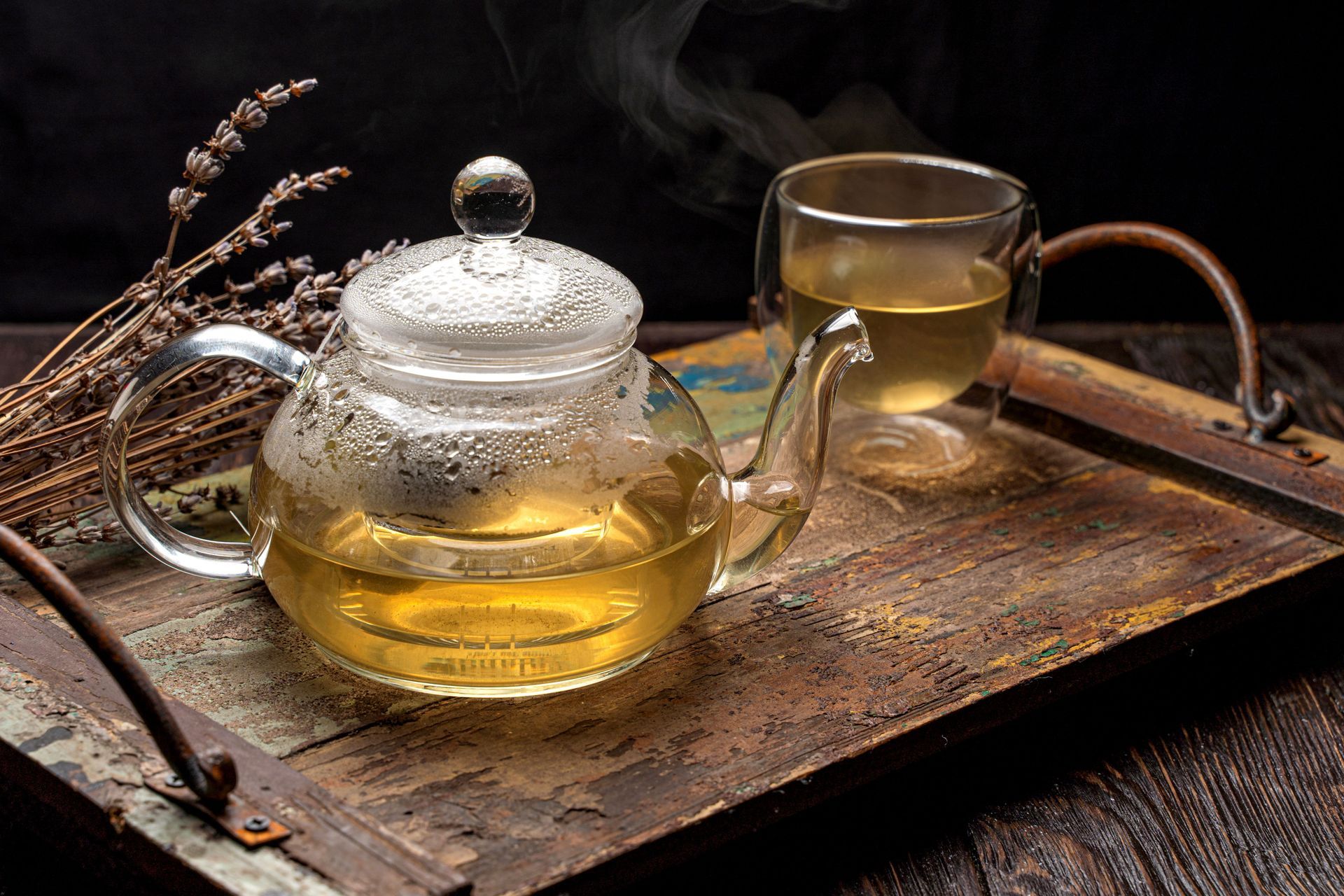
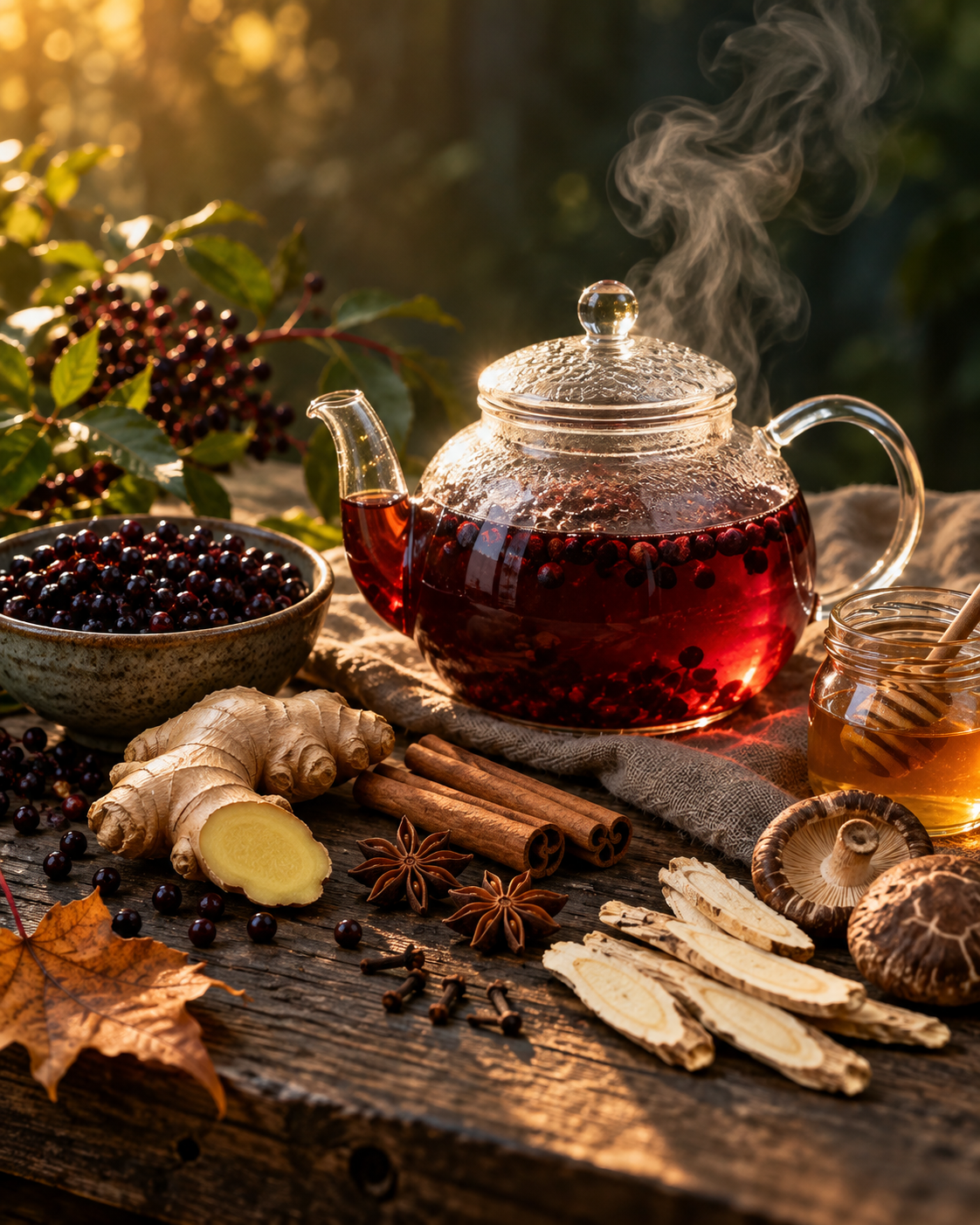
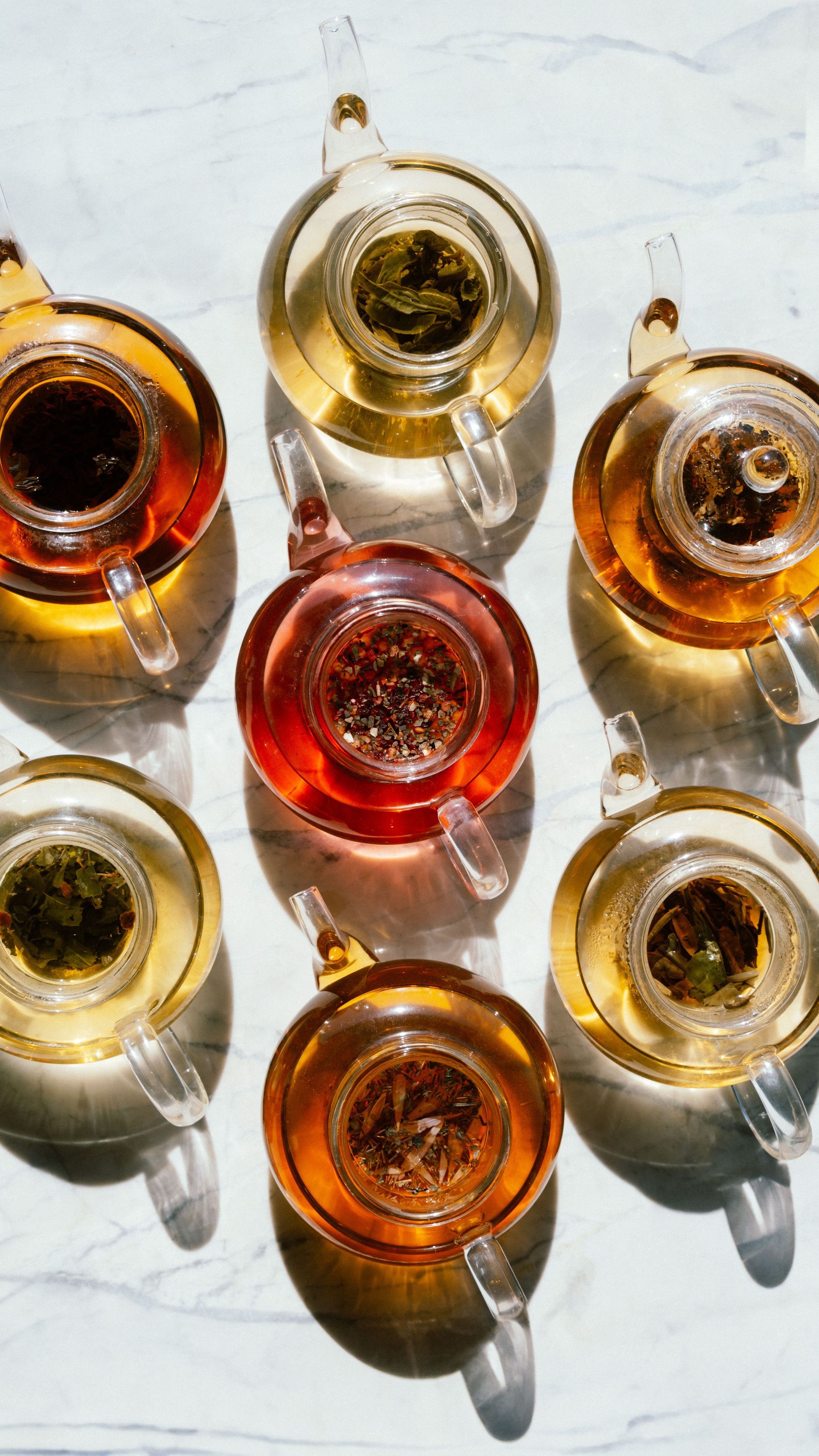
One simple way to meet that need is a ritual of your own: a warm pot of tea, made with care and ideally shared. We call this blend Golden Hour Tea. Pour it after lunch, when the afternoon begins to sag, or in the evening in place of a drink. It isn't a treatment for SAD. It's a small daily pleasure, a bright and comforting cup to put a lift in your day and a reason to gather someone round the table.
In the cup
Lift the lid and autumn rises with the steam. Chamomile comes first, golden and honeyed, like late sun on a kitchen windowsill. Then tulsi, bright and a little peppery, with a whisper of clove and a leaf of mint, a green spark that wakes you gently from the inside. Orange peel catches the light like the last leaves on the branch, warm and zesty and just bitter enough to feel alive. Skullcap and oat lie softly underneath, hay-sweet and grounding, steadying the whole cup like firm earth underfoot. And through it all runs cinnamon, a thread of woodsmoke warmth, the feeling of coming in from the cold to a lit room and a full table. It tastes like golden hour, in a cup.
Golden Hour Tea (by volume)
- ½ part skullcap (Scutellaria lateriflora)
- ½ part milky oat tops or oat straw
- 1 part chamomile
- 1 part tulsi (holy basil)
- 1 part dried orange peel
- A small piece of cinnamon stick per pot
To make it: Use one heaped teaspoon of the herb mix per cup. Pour over freshly boiled water, cover to keep in the aromatic oils, and steep for ten minutes. Strain, and drink it warm, ideally with good company.
Why these plants? Tulsi is the bright heart of the blend: an uplifting, aromatic adaptogen, traditionally used to restore energy and help the body cope with stress. Skullcap and oat bring a calm steadiness, soothing a restless mind and nourishing frazzled nerves, so the lift feels settled rather than jittery. Chamomile adds a gentle bitterness that supports digestion, welcome after a meal. Orange peel brings brightness, and a touch of cinnamon adds warmth and natural sweetness.
A note on safety: Herbs are active substances, so if you take regular medication, are pregnant or breastfeeding, or have a medical condition, check with a practitioner first. Skullcap can add to the effect of sedatives, sleep aids and alcohol, and tulsi can lower blood sugar, so take particular care if you use diabetes medication. Chamomile may not suit anyone allergic to the daisy family. Oats are naturally gluten-free, but oat herbs can be cross-contaminated with gluten grains, so anyone with coeliac disease should look for a certified gluten-free source.
Our approach at Wildberry Clinic
We begin by looking at how the season is affecting you: your mood, motivation, sleep, appetite, energy and ability to manage daily life. We consider your previous autumn and winter patterns alongside current pressures, medical history and medicines.
Circadian rhythm is a central part of that assessment. How much daylight reaches your day? When do you sleep and wake? Do your evenings allow you to unwind? From there, we help you build practical routines around daylight, sleep, movement and meals, and discuss whether assessment for light therapy would suit you.
We also look at nutrition and other possible contributors to fatigue or low mood, liaising with your GP where investigation is needed. Where an inflammatory condition is relevant to your wider health, it deserves attention too, though we don't assume that everyone with SAD has an immune disorder.
Connection belongs in the care plan. Together we explore achievable ways to keep hold of companionship, pleasure and meaningful activity through the darker months. A regular walk with a friend, a shared meal or a group activity can offer a way in just when withdrawal starts to feel easier.
Our aim is to support the conditions that help you function and feel well through the season, with follow-up to review how you're getting on. Persistent or significant depression needs GP assessment, and our care can work alongside psychological therapy and prescribed treatment.
Perhaps there is something worth carrying forward from the old seasonal gatherings: making time to meet, share food, and enjoy one another's company as the days grow short. A little warmth, a little company, and a cup that tastes like autumn at its best.
Disclaimer
This article is for general information and education and does not replace individual medical advice, diagnosis or treatment. Seasonal affective disorder is a form of depression that may require professional care. Wildberry Clinic’s support is complementary to appropriate medical and psychological treatment. Do not stop or change prescribed medicines without consulting your prescriber.
References
- National Institute of Mental Health. Seasonal affective disorder.
https://www.nimh.nih.gov/health/publications/seasonal-affective-disorder
- Lewy AJ, Lefler BJ, Emens JS, Bauer VK. (2006). The circadian basis of winter depression. Proceedings of the National Academy of Sciences. DOI:
10.1073/pnas.0602425103.
- Wright KP Jr, et al. (2013). Entrainment of the human circadian clock to the natural light-dark cycle. Current Biology. DOI:
10.1016/j.cub.2013.06.039.
- Dopico XC, et al. (2015). Widespread seasonal gene expression reveals annual differences in human immunity and physiology. Nature Communications. DOI:
10.1038/ncomms8000.
- Song C, et al. (2015). Enhanced inflammatory and T-helper-1 type responses but suppressed lymphocyte proliferation in patients with seasonal affective disorder and treated by light therapy. Journal of Affective Disorders. DOI:
10.1016/j.jad.2015.06.003.
- Moieni M, et al. (2015). Sex differences in depressive and socioemotional responses to an inflammatory challenge: implications for sex differences in depression. Neuropsychopharmacology. DOI:
10.1038/npp.2015.17.
- Cole SW, Capitanio JP, Chun K, Arevalo JMG, Ma J, Cacioppo JT. (2015). Myeloid differentiation architecture of leukocyte transcriptome dynamics in perceived social isolation. Proceedings of the National Academy of Sciences. DOI:
10.1073/pnas.1514249112.
- Cohen S, Doyle WJ, Skoner DP, Rabin BS, Gwaltney JM Jr. (1997). Social ties and susceptibility to the common cold. JAMA. DOI:
10.1001/jama.1997.03540480040036.
- National Museum of Ireland.
Autumn: Irish harvest traditions and folklore.
- National Museum of Ireland.
Traditions and customs of Halloween / Samhain.
- National Institute on Alcohol Abuse and Alcoholism.
Hangovers.
- National Institute on Alcohol Abuse and Alcoholism.
The cycle of alcohol addiction.