From Plant to Prescription: The Olive Tree — One Tree, Two Medicinal Paths
Written by N. Streawbridge| 29 April 2026
From ancient hearths to modern herbal medicine, the story of a tree that has nourished, illuminated and cared for humanity for thousands of years.
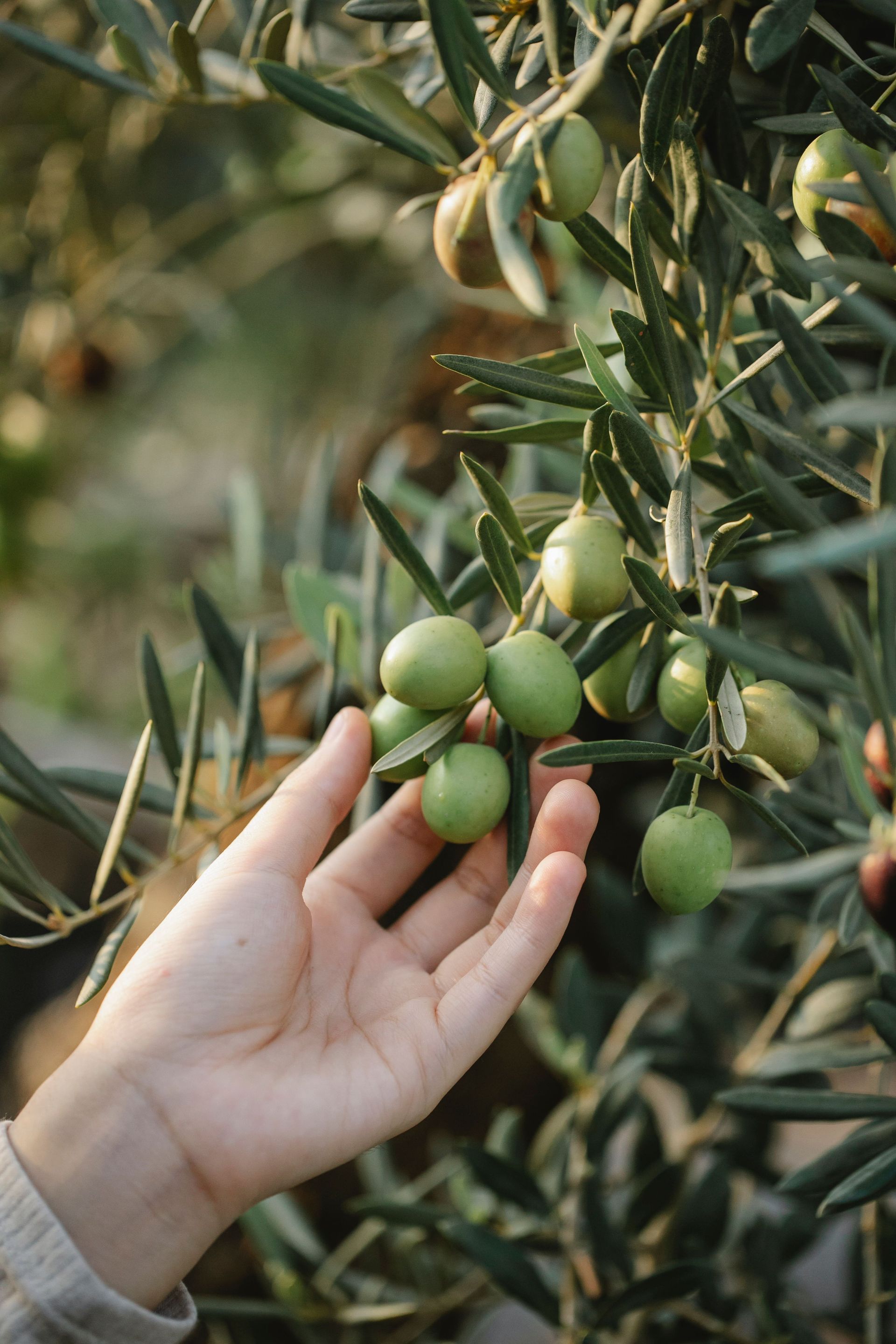
An olive tree never looks hurried.
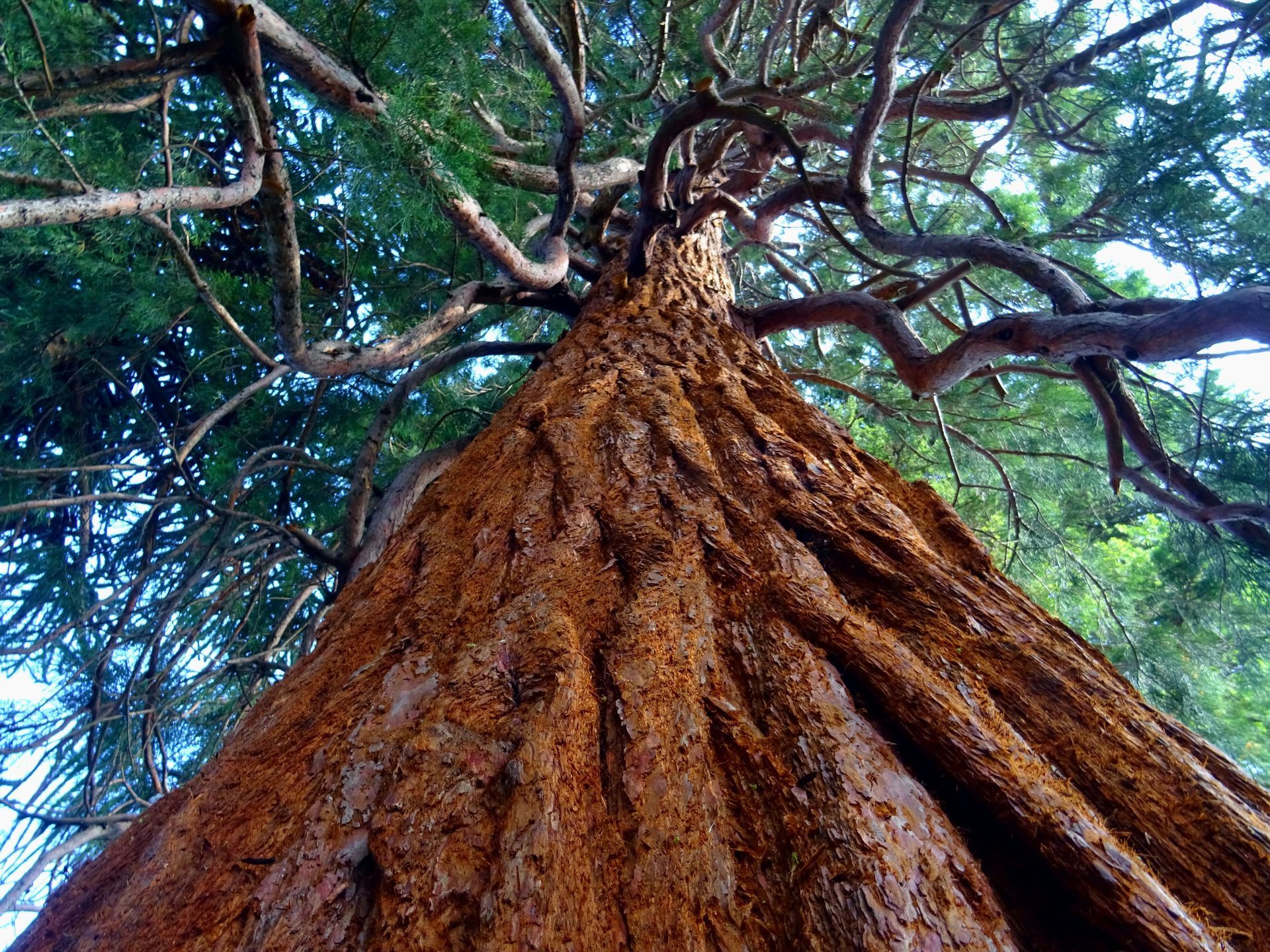
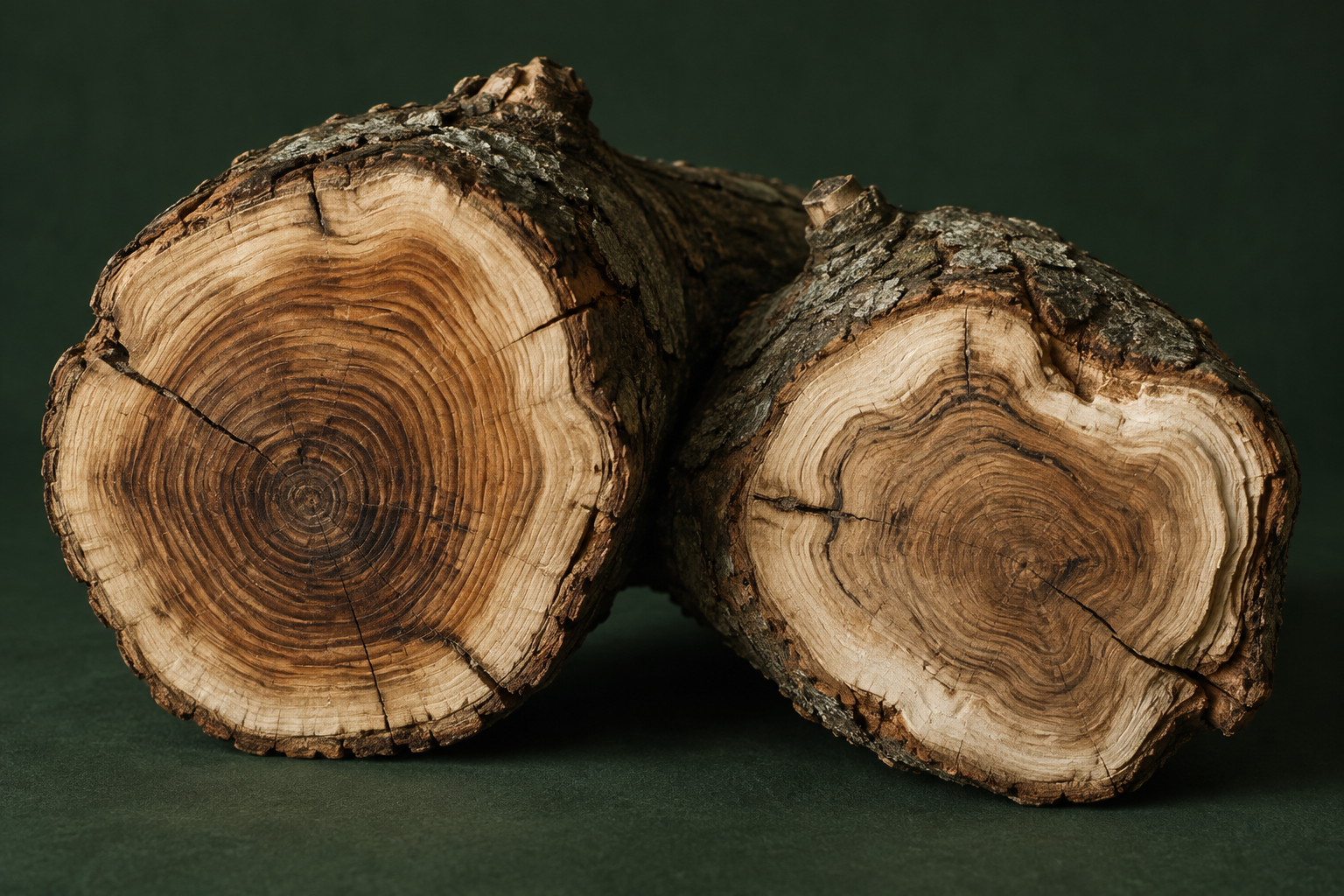
Its trunk thickens and twists; its bark records heat, wind and drought. The leaves are green above and silver beneath, so the whole crown appears to change colour when the wind moves through it. Small pale flowers become hard green fruits, which slowly darken as they ripen.
Its beauty is inseparable from its usefulness. For communities around the Mediterranean and Near East, the olive tree offered fruit, oil, wood, fuel, shade and leaves. Its oil fed people, burned in lamps, perfumed and anointed the body, accompanied ritual, and carried medicines. Because a grove takes years to mature but can serve generations, the olive also came to represent continuity, peace and endurance.
The medical history of the olive makes most sense when we begin with that larger relationship. Humanity did not discover an “olive remedy” at one particular moment. People first learned to use the whole tree. Medicine emerged from that accumulated knowledge.
From wild olive to cultivated grove
The earliest chapter begins long before agriculture or writing. In two caves on the Atlantic coast of Morocco, archaeologists found wild-olive wood and fragmented olive stones dating to around 100,000 years ago. The evidence suggests that early Homo sapiens used the fruit and then burned the broken, oil-rich stones as fuel.
Much later, people learned to separate the oil from the fruit. At Kfar Samir, a submerged settlement on the Carmel coast, archaeologists found thousands of crushed olive stones together with stone basins and woven baskets interpreted as strainers. The site, dated to approximately 7,500–7,000 years ago, provides some of the earliest evidence of organised olive-oil extraction.
The next transformation was horticultural. At Tel Tsaf in the central Jordan Valley, charred olive wood dating to about 7,000 years ago was found outside the wild olive’s natural range. Fruit might have arrived through trade; quantities of wood suggest that the trees themselves were growing nearby. People were no longer simply gathering olives. They were establishing groves.
That decision changed the relationship between plant and people. Annual crops promise food for the next season. An olive grove asks a family or community to think in decades: who owns the land, who tends the young trees, and who will inherit their harvest? The olive became part of settlement, trade and continuity between generations.
When olive oil entered the written record
Archaeology shows us stones, wood and pressing equipment. Writing later shows us how societies organised the oil.
Among the earliest surviving written records are cuneiform tablets from the palace archive at Ebla in northern Syria, dating to approximately 2350–2250 BCE, which document olive cultivation and oil production. Mycenaean Linear B tablets from the second millennium BCE later recorded olive oil within palace economies, including perfumed oils and religious offerings. By then, olive oil was not merely something to eat. It was measured, stored and traded. It illuminated houses and sanctuaries. It was used in fragrance, body care, ceremony and the preparation of remedies.
This helps explain why olive oil appears so naturally in one of the earliest substantial medical texts to survive.
Olive oil enters medicine: an Egyptian facial preparation
The Ebers Papyrus, compiled around 1550 BCE, includes a preparation for a concern that remains familiar today: wrinkles.
Egyptian facial preparation, c. 1550 BCE
Ingredients: incense cake, wax, fresh olive oil, cyperus and fresh milk.
Method: crush and grind the solid ingredients, combine them with fresh milk and apply for six days.
Recorded use: “to drive away wrinkles from the features.”
This is an early example of compounding. The finished preparation was not simply olive oil placed on the skin. Oil, wax, aromatic resin, plant material and milk were combined to create a preparation with texture, spreadability and staying power.
Why was olive oil used in topical preparations?
Olive oil could perform several jobs at once:
- It spread easily. A small quantity could carry other ingredients over the skin.
- It softened and lubricated. This made it useful in preparations for dry or rough surfaces.
- It dispersed other materials. Crushed plants, powders and aromatic resins could be distributed through the oil rather than applied separately.
- It carried oil-soluble constituents. Fragrant and resinous components could move into the oily phase of a preparation.
- It combined with wax. Oil supplied softness and movement; wax supplied body. Together they could form an ointment-like preparation that remained where it was applied.
Olive oil was also familiar. People already used it for washing, massage, anointing and fragrance. Its entry into topical medicine was therefore an extension of everyday knowledge about how oil behaved on the body.
The leaf becomes a medicine of its own
Olive oil dominated domestic and ceremonial life, but the leaf followed a separate medical path.
In the first century CE, Pliny the Elder described olive leaves as strongly astringent, cleansing and binding. He also recorded how their juice was prepared and preserved.
Pliny’s concentrated olive-leaf preparation
Ingredients: olive leaves, wine and rainwater.
Method: crush the leaves with the liquids, draw off the juice, dry it and work it into small “lozenges”.
Recorded use: a concentrated material for medicinal salves, particularly preparations for the eyes and skin.
The “lozenges” were not sweets. They were small dried medicinal cakes or tablets. Drying made the leaf preparation easier to store; a compounder could later take a measured portion and add it to a salve.
This recipe marks an important change in the story. The leaf was no longer a secondary part of the tree. It had become a medicinal material in its own right, with its own extraction method, dosage form and uses.
From traditional preparation to official pharmacy
For centuries, olive oil continued to serve as both a substance in its own right and a base for extracting other plants. By the nineteenth century, pharmacopoeias began to define that work more precisely.
The 1884 French Codex medicamentarius gave a formula for chamomile oil:
French chamomile oil, 1884
Ingredients: 100 g dried Roman chamomile flowers and 1,000 g olive oil.
Method: heat in a covered water bath for two hours, stirring occasionally; then press and filter.
Use: an external medicated oil, used by itself or incorporated into liniments for rubbing over painful, stiff or spasmodic areas.
The 1909 Italian Pharmacopoeia recorded a related preparation, but used a different proportion and method:
Italian chamomile oil, 1909
Ingredients: one part fresh chamomile flowers and four parts olive oil.
Method: macerate for several days in a covered vessel; then strain through cloth, press and filter.
Use: a chamomile-infused oil for external application and topical compounding.
The pharmacopoeial entries standardised how pharmacists were to make the oil; they did not attach it to one diagnosis. Contemporary dispensatories supply the missing context. They classed medicated oils as external medicines, and Dorvault’s L’Officine instructed pharmacists to combine equal parts of chamomile oil and camphorated olive oil to make huile de camomille camphrée. An earlier French materia medica described a liniment of lavender, St John’s wort and chamomile oils for rubbing in cases of rheumatism, paralysis and what the text called “convulsive movements”.
The purpose was therefore topical soothing through friction: chamomile supplied the medicinal flower constituents, while olive oil extracted them, spread them over the skin and made massage possible.
The leaf enters the modern pharmacopoeia
The leaf’s route into modern pharmacy was different. European practitioners used olive leaf as a bitter febrifuge during the nineteenth century. In 1854, the pharmacist Daniel Hanbury described an olive-leaf tincture used for severe and intermittent fevers. Spanish physicians and French medical officers had also used the leaves in this way.
Modern pharmacopoeias shifted the emphasis from a list of traditional uses to verifiable identity and composition. The European Pharmacopoeia defines Oleae folium as the dried leaf of Olea europaea L. containing at least 5% oleuropein, a bitter constituent. A separate monograph covers dry olive-leaf extract. The European Medicines Agency’s historical review also records a water preparation:
Traditional olive-leaf decoction
Ingredients: up to 10 g dried olive leaves and 300 mL water.
Method: boil until 200 mL remains, then filter.
Recorded use: a traditional mild diuretic preparation used to promote renal water elimination.
The sequence is now clear. Pliny concentrated fresh leaf juice for salves. Later European practice prepared the dried leaf in water or as powder and tincture. Modern pharmacopoeias then defined the identity and chemical quality of the medicinal leaf.
Olive oil and olive leaf today: one tree, two modern paths
Thousands of years after the first olives were gathered and pressed, the tree still contributes to health in two distinct ways. The fruit gives us an oil whose strongest evidence comes from regular dietary use; the leaf has become a herbal medicine prepared as tea, powder, tincture or concentrated extract.
Olive oil: medicine through nourishment
Extra-virgin olive oil is not usually taken as a short course of treatment. Its value emerges through regular use as part of a Mediterranean dietary pattern—alongside vegetables, legumes, whole grains, nuts, fish and other minimally processed foods.
This was demonstrated in the PREDIMED trial, which followed people at high cardiovascular risk. Those assigned to a Mediterranean diet supplemented with extra-virgin olive oil or nuts experienced fewer major cardiovascular events than those following the control diet.
The European Union supports the claim that olive-oil polyphenols help protect blood lipids from oxidative stress when the oil supplies the required amount of hydroxytyrosol and related compounds. Not every olive oil contains the same quantity: variety, ripeness, harvesting, processing and storage all influence its polyphenol content.
Olive leaf: a more concentrated herbal preparation
The leaf follows a different route. Clinical research has explored its possible influence on blood pressure, vascular function, blood lipids, glucose regulation, oxidative stress and inflammatory markers. The results vary, partly because “olive leaf” can describe several quite different preparations.
A cup of leaf tea, a tincture and a standardised extract do not necessarily deliver the same constituents in the same concentrations. The form of the medicine is therefore central to understanding both its purpose and the evidence behind it.
The European Medicines Agency recognises olive leaf’s longstanding use for promoting renal water elimination in mild fluid retention, once more serious causes have been excluded. This reflects one of the leaf’s oldest surviving roles in European herbal medicine.
How olive leaf is prepared today
Modern herbal practice continues to use the leaf in several forms:
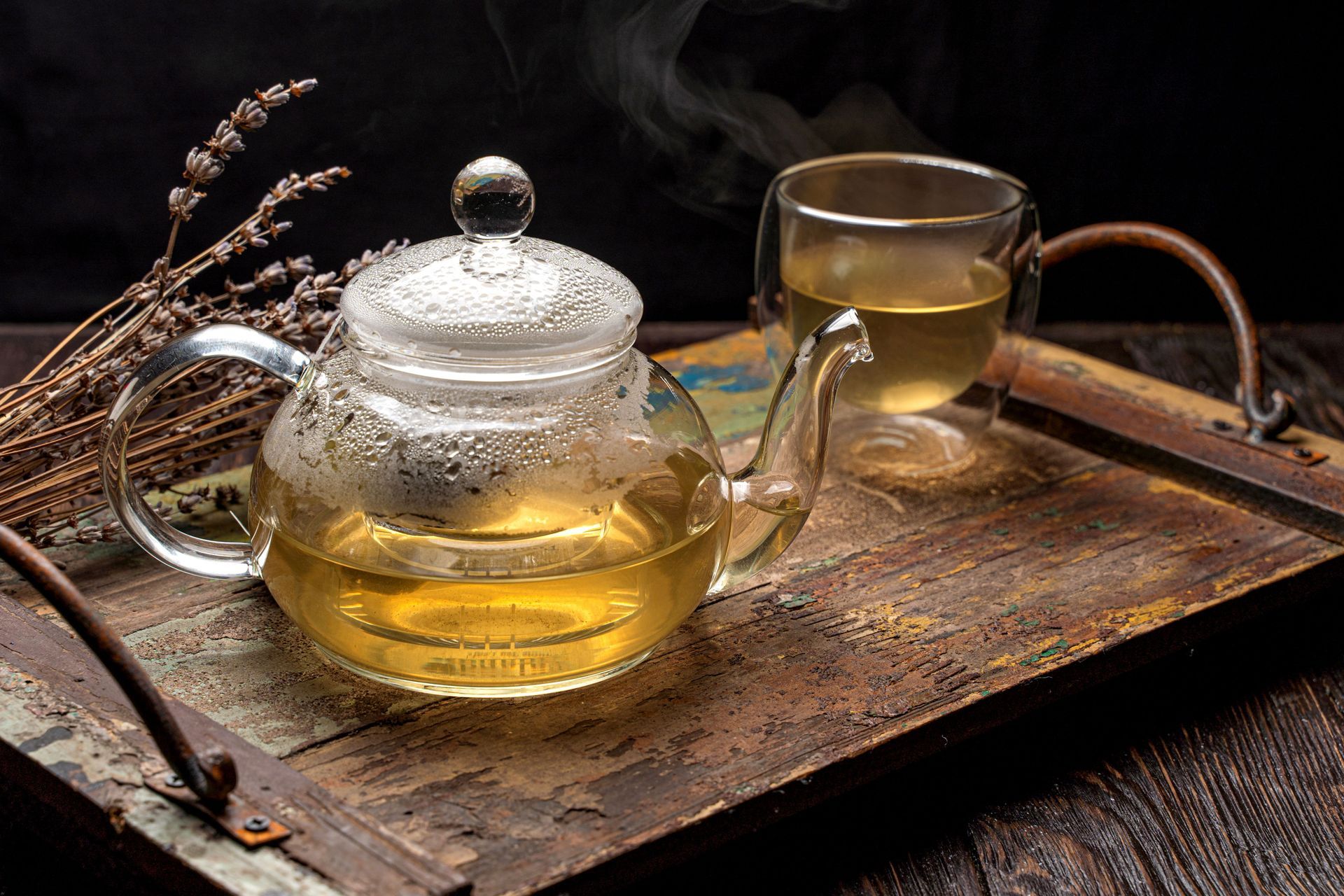
- Infusion or decoction: dried olive leaf is prepared in hot water. This is the form most closely connected with older European practice and its use in supporting renal water elimination.
- Powdered leaf: the whole dried leaf is milled and supplied in capsules or tablets, providing a measured quantity of the plant material.
- Tincture or liquid extract: medical herbalists may include olive leaf within an individually formulated prescription. A liquid extract makes it possible to combine the leaf with other herbs and adjust its proportion according to the purpose of the formula.
- Standardised dry extract: frequently used in clinical studies and manufactured products because it provides a defined concentration of selected olive-leaf constituents, commonly expressed according to its oleuropein content.
In contemporary practice, olive leaf is often placed within a broader cardiovascular or metabolic formulation. It may be considered when the clinical picture includes mildly raised blood pressure, altered vascular function, blood-lipid concerns or impaired glucose regulation. Its traditional renal action may also be relevant when mild fluid retention forms part of the wider picture.
A new question: olive leaf and SIBO
One of the newest areas of interest comes from digestive research. In 2025, a small randomised, open-label study followed 49 adults with breath-test-confirmed small intestinal bacterial overgrowth, or SIBO.
Participants in the treatment group prepared a tea using 1.7 grams of powdered olive leaf in 250 millilitres of hot water, taken twice daily for two months. Their gastrointestinal symptom scores improved, and 88% had a normal follow-up breath test, compared with 4.2% of the control group.
This was the first small study to examine olive-leaf tea used alone in this setting. It does not yet place SIBO among the leaf’s established applications, but it opens an intriguing new direction for research—particularly because the preparation was a simple tea rather than a highly concentrated extract.
The plant is chosen; the person guides the prescription
Olive leaf is rarely considered in isolation. Its place within a herbal prescription depends on the individual: their blood pressure, metabolic and digestive pattern, the purpose of the formula, the other herbs being used and any medicines already being taken.
The wider plan may also address food, movement, sleep, stress, body composition and appropriate medical monitoring. The leaf becomes one carefully selected part of that plan rather than the whole of it.
The two modern paths of the olive tree are therefore quite different. Olive oil works principally through nourishment and regular dietary use. Olive leaf is prepared as a more targeted herbal medicine. One comes from the fruit and the other from the silver-green canopy—but both continue the tree’s remarkable relationship with human health.
One tree, two medicinal paths
Olive oil began as food, fuel, light and body care. These physical uses made it a natural ingredient in ancient topical preparations and, later, a valuable pharmaceutical carrier for medicated oils, ointments and liniments. Today, its strongest evidence belongs to nutrition and the Mediterranean dietary pattern.
Olive leaf began as an astringent plant material that could be crushed, extracted, dried or boiled. It later became a pharmacopoeial substance defined by botanical identity and oleuropein content. Today, it remains a preparation-dependent herbal medicine with a narrower recognised traditional use and several areas of ongoing research.
One tree, two medicinal paths: the fruit gave an oil that nourished, illuminated, softened and carried remedies; the leaf became a medicine with its own preparations, purposes and place in the pharmacopoeia. Their histories diverged, but their gifts came from the same silver-green crown.
Across thousands of years, the olive tree has given humanity food and shade, wood and fuel, light for the darkness, oil for the skin, a carrier for medicines and leaves for the healer’s store. It has stood beside households, temples, farms, apothecaries and modern laboratories, quietly offering one useful part after another.
So the final word belongs to the tree itself: thank you, olive tree—for your abundance, patience and endurance, and for all the ways you have helped human life to continue and flourish. For thousands of years, humanity has tended the olive; for thousands of years, the olive has helped to tend humanity.
References
- Marquer L, et al. The first use of olives in Africa around 100,000 years ago. Nature Plants. 2022;8:204–208. Research article.
- Langgut D, Garfinkel Y. 7000-year-old evidence of fruit tree cultivation in the Jordan Valley, Israel. Scientific Reports. 2022;12:7463. Research article.
- Galili E, et al. Evidence for earliest olive-oil production in submerged settlements off the Carmel coast, Israel. Journal of Archaeological Science. 1997;24:1141–1150. Publication.
- Archi A. Culture de l’olivier et production de l’huile à Ebla. 1991. Cuneiform Digital Library Initiative record.
- Melena JL. Olive oil and other sorts of oil in the Mycenaean tablets. Publication record.
- Bryan CP. The Papyrus Ebers. London: Geoffrey Bles; 1930. English text.
- Pliny the Elder. Natural History, Book XXIII. Olive passages.
- Codex medicamentarius: Pharmacopée française. Paris; 1884. “Huile de camomille.” Digitised text.
- Farmacopea ufficiale del Regno d’Italia. 1909. “Olio di olive” and “Olio di camomilla.” Digitised text.
- Dorvault F. L’Officine ou Répertoire général de pharmacie pratique. Paris: Labé; 1844. “Huiles médicinales”, “Huile de camomille” and “Huile camphrée”. Digitised book.
- Chomel PJB, Maillard JBN. Histoire abrégée des plantes usuelles. Paris: Duprat-Duverger; 1804. Chamomile-containing liniment. Digitised book.
- European Medicines Agency. Assessment report on Olea europaea L., folium. Assessment report.
- Estruch R, et al. Primary prevention of cardiovascular disease with a Mediterranean diet supplemented with extra-virgin olive oil or nuts. N Engl J Med. 2018. PubMed.
- Zafar A, et al. Therapeutic effects of olive leaf tea (Olea europaea L.) on gastrointestinal symptoms and body composition in adults with small intestinal bacterial overgrowth. Front Nutr. 2025;12:1659500. Research article.
- A GRADE-assessed systematic review and meta-analysis of olive leaf or olive pomace supplementation. 2026. PubMed.
- European Commission. Authorised health claim for olive-oil polyphenols and protection of blood lipids from oxidative stress. EU Register.
Recent Posts