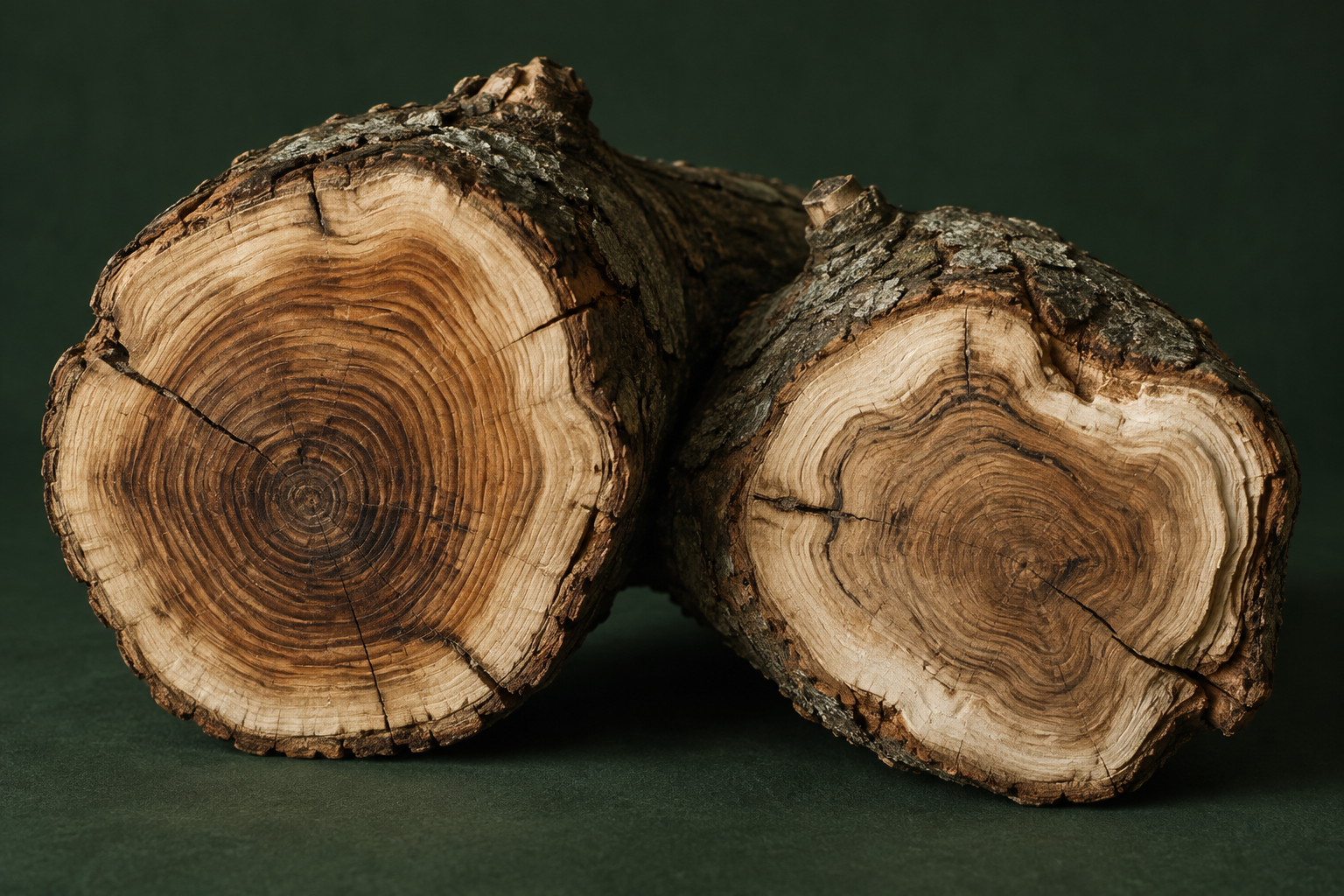
Among the glossy leaves of the jujube tree, this year’s fruits are still small and green. Over the coming weeks, they will ripen through shades of yellow and red until their skins become glossy and deep red-brown.
Collected at maturity and dried, these fruits become the red dates known in Chinese medicine as
Da Zao. They have been used for more than two thousand years in formulas for people who feel depleted, whose digestion is weak or whose sleep has become unsettled.
Jujube also developed a second medical life far from East Asia. By the eighteenth century, French apothecaries were combining the fruit with barley, liquorice and violet flowers in a sweet syrup for coughs and the chest.
The history of jujube is therefore not one simple story. It is the story of a fruit understood differently by different medical traditions—and still used by herbalists today.
Meet the Plant
Jujube, botanically known as Ziziphus jujuba, belongs to the Rhamnaceae or buckthorn family. It is a deciduous shrub or small tree native to northern and eastern China and the Korean Peninsula, although centuries of cultivation have carried it across Asia, the Middle East and southern Europe.
The tree often has slender, thorny, reddish-brown branches. Its small oval leaves are glossy and finely toothed, with three strong veins rising from near the base. Small yellow-green flowers are followed by smooth green fruits.
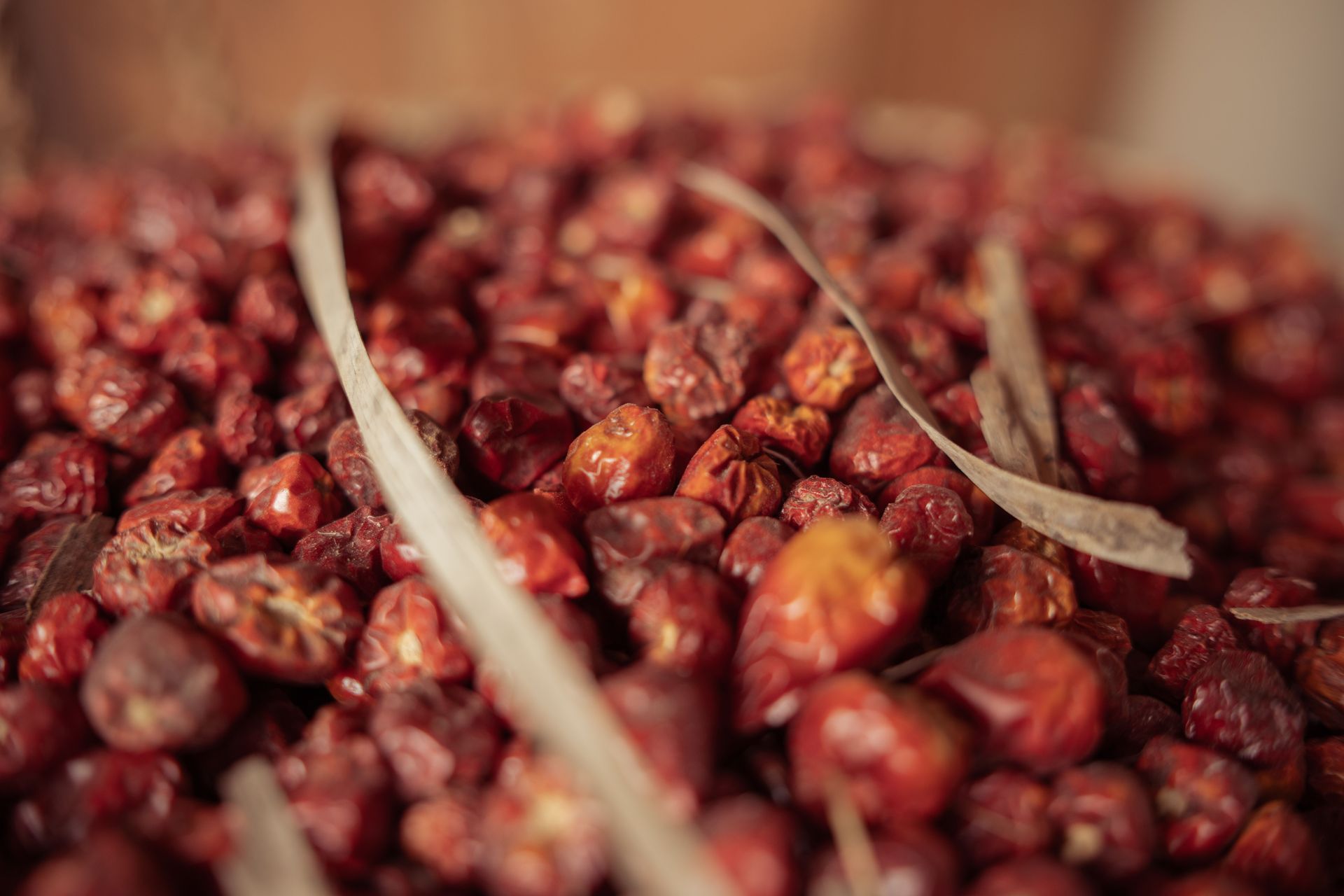
As the fruit ripens, its colour and texture change. The skin passes from green through mottled yellow-red to a richer red-brown. Fresh ripe jujubes are crisp and juicy. Drying concentrates their sweetness and transforms them into soft, wrinkled red fruits.
This stage of maturity is important. The medicinal material called Da Zao is the
dried ripe fruit, not the unripe green fruit. Ripening and drying both alter the fruit’s sugars, acids, pigments and wider chemical profile.
A Fruit Shaped by East Asia
Jujube has a long history as both a food and a medicine in China. Archaeological and written evidence points to thousands of years of cultivation, during which people selected trees for fruit size, sweetness, texture and suitability for drying.
Fresh fruits could be eaten in season, while drying made the harvest easier to store, transport and use throughout the year. Dried jujubes became familiar ingredients in soups, porridges, drinks, desserts and herbal decoctions.
This overlap between food and medicine remains central to the fruit’s identity. Da Zao is not an exotic substance isolated from ordinary life. It is a nourishing food that also became part of a sophisticated system of herbal prescribing.
Traditional Preparation
Ripe jujubes are collected when their skins have turned red or red-brown. The fruits are then dried, after which they may be used whole or sliced open before preparation. Removing or exposing the stone allows water to reach more of the fruit during simmering.
In Chinese herbal practice, Da Zao is generally simmered with other ingredients as part of a decoction. It may also appear in soups, porridges and simple drinks. Its natural sweetness can soften the bitterness or sharpness of other herbs, but its role is not merely to improve the flavour.
Traditional descriptions associate the fruit with restoring strength, supporting appetite and digestion, replenishing after illness and helping a person feel more settled. It is also used to moderate stronger ingredients and bring the different parts of a prescription together.
Da Zao in Chinese Medicine
Da Zao appears in the early Chinese materia medica tradition preserved in the Shen Nong Ben Cao Jing, a text compiled from knowledge that is more than two thousand years old. The fruit was described in relation to strengthening the body, supporting the digestive centre and moderating other medicines.
Today, herbalists still include it in individualised formulas when someone feels run-down, has a poor appetite or weak digestion, or is recovering from illness. It may also be selected when emotional strain and exhaustion are accompanied by unsettled sleep.
One classical example is
Gan Mai Da Zao Tang, a formula containing Da Zao, wheat and liquorice. Traditionally, it is associated with a pattern of emotional distress, restlessness, tearfulness, frequent yawning and difficulty settling.
This is an important example because it shows that the fruit is genuinely used in formulas intended to encourage
restful sleep. However, Da Zao is not usually treated as a powerful sleeping herb on its own. Its role is gentler and broader: it supports a depleted person while contributing to the balance of the complete formula.
Fruit and Seed: Two Different Medicines
The jujube fruit is sometimes confused with another important Chinese herbal medicine: sour jujube seed.
Da Zao is the dried ripe fruit of Ziziphus jujuba. It is used principally as a nourishing, digestive and restorative ingredient. When it appears in a sleep formula, it is often because poor sleep sits alongside tiredness, emotional strain or digestive weakness.
Suan Zao Ren is the dried mature seed of sour jujube. It is the more directly sleep-focused medicine and is commonly selected for difficulty falling asleep, frequent waking, restlessness and night sweating. The seed is usually crushed before being simmered so that its constituents can be extracted more effectively.
The two materials are related, but they are not interchangeable. Some formulas contain the fruit, some contain the seed, and their place within a prescription is different.
A Place in French Pharmacy
J
ujube also travelled west, although its exact route into France is not fully documented. The Roman writer Pliny the Elder recorded that a jujube tree had been introduced into Italy during the final years of the emperor Augustus, around the beginning of the first century CE.
By the eighteenth century, the French evidence is much clearer. Jujube trees were growing in Provence and Languedoc, and the dried fruit was kept by apothecaries. The French Encyclopédie described jujubes as one of the sweet “pectoral fruits”—fruits used to soothe coughs and irritation of the chest.
The official
Paris Pharmacopoeia of 1748 contains a compound jujube syrup beginning with an unexpectedly generous quantity:
sixty jujubes. The fruit was combined with barley, liquorice, maidenhair fern, violet flowers and the seeds of mallow, an ingredient rarely encountered in modern Western herbal practice, quince, white poppy, melon and lettuce. The ingredients were simmered in water, strained and finished with sugar to make a syrup.
This was not a French sleep medicine. Barley provided a soft, slightly viscous base, while liquorice, violets and the other ingredients belonged to the European tradition of soothing preparations for the throat and chest.
The earlier Paris Pharmacopoeia of 1638 does not list a named jujube syrup in its index. By 1748, however, the preparation had gained an official place in Parisian pharmacy. There is currently no reliable primary evidence connecting this particular remedy with French monks; its documented French history belongs to apothecaries.
An Older Mediterranean Story
Related jujube trees appear in the records of ancient Egypt and the classical Mediterranean, but the botanical distinctions matter.
Ancient Egyptian prescriptions used Christ’s-thorn jujube, Ziziphus spina-christi, in remedies for swelling, pain and heat. This was a genuine medicinal jujube, but it was a local species rather than the East Asian Ziziphus jujuba.
The first-century Greek physician Dioscorides described a tree called lotos, which some modern editors identify as a species of Ziziphus. Its sweet fruit and wood were given several astringent uses. Because the name “lotus” was applied to more than one ancient plant, the passage cannot prove that Greek physicians were using Chinese jujube specifically.
These records show that several members of the jujube family entered medicine in different regions. They should not be combined into one continuous tradition or attributed to a single species.
What Is Inside Jujube Fruit?
Jujube fruit contains a complex mixture of nutrients and plant compounds, including:
- polysaccharides
- flavonoids
- phenolic acids
- triterpenoids
- cyclic nucleotides
- organic acids
- pigments, including anthocyanins in the coloured skin
The amounts of these constituents vary with the cultivar, growing conditions, stage of ripeness, part of the fruit and method of drying or extraction.
A fresh fruit, a traditional dried red date, a water decoction and a concentrated laboratory extract are therefore not chemically identical preparations. This matters when traditional practice is compared with modern research.
What Does Modern Research Tell Us?
Research on jujube fruit has examined its antioxidant and anti-inflammatory activity, its changing chemistry during ripening and its possible effects on digestion and metabolic health. Much of this work remains laboratory-based or preclinical, while the human studies are still relatively small and use differing preparations.
The direct human evidence for the fruit as a treatment for insomnia is limited. This does not mean that Da Zao has no place in formulas for restful sleep. It means that its traditional use usually occurs within a multi-herb prescription and has not yet been adequately tested as an isolated fruit preparation in large clinical trials.
The seed has been studied more directly. A randomized, double-blind, placebo-controlled crossover feasibility trial published in 2021 investigated a Ziziphus spinosa seed preparation in adults with insomnia. Participants received two grams of encapsulated granules daily or placebo for four weeks before crossing over after a washout period.
The study showed that a carefully designed clinical trial of the seed was feasible and reported encouraging sleep findings. However, it was a small feasibility study rather than definitive proof of effectiveness. Most importantly, its results cannot be transferred automatically to Da Zao fruit.
The modern evidence therefore supports the same distinction found in traditional practice: the fruit is a broader nourishing and formula-balancing medicine, while the seed is the more directly sleep-focused material.
🌿 Key Takeaways
Jujube is an East Asian fruit that ripens from green to red-brown. Collected ripe and dried, it becomes Da Zao, a traditional Chinese medicine used for more than two thousand years.
The dried fruit is included in formulas for low energy, weak digestion, recovery and restful sleep. It is different from sour jujube seed, which is the more directly sleep-focused medicine.
By 1748, jujube had also entered the official Paris Pharmacopoeia, where sixty fruits were used in a compound syrup for coughs and the chest.
🌱 A Herbalist’s Perspective
Jujube is a beautiful example of why the role of a herb cannot always be reduced to one symptom or one active compound.
The fruit does not belong only to “digestion” or only to “sleep.” In traditional practice, it is chosen when these functions are connected—when poor sleep accompanies depletion, emotional strain, poor appetite or difficulty recovering. Its contribution comes partly from the fruit itself and partly from the way it changes the balance of the complete formula.
Its European history tells a different but equally valuable story. French apothecaries did not use jujube in the same way as Chinese physicians. They placed it among soothing fruits for the throat and chest.
The interesting question is therefore not simply, “What is jujube for?” It is how the same fruit was observed, prepared and understood within different systems of medicine—and how those older observations can now be examined with botanical precision and modern scientific care.
Clinical herbal medicine grounded in science and individualised care.
This article is for educational and informational purposes only. It does not replace medical advice, diagnosis or consultation with a qualified healthcare professional. Herbal medicines are not appropriate for every person or every condition, and scientific evidence continues to evolve.
References
- Royal Botanic Gardens, Kew.
Plants of the World Online: Ziziphus jujuba Mill.
- Shen Nong Ben Cao Jing.
Classical materia medica entry for Da Zao.
- Zhang Zhongjing. Jin Gui Yao Lue, chapter 22.
Gan Mai Da Zao Tang.
- Hong Kong Baptist University.
Medicinal Plant Images Database: Da Zao / Jujubae Fructus and Suan Zao Ren / Ziziphi Spinosae Semen.
- Codex medicamentarius seu Pharmacopoea Parisiensis. Paris, 1748.
Syrupus Jujubinus, pp. 92–93.
- Venel.
Jujube. Encyclopédie, ou Dictionnaire raisonné des sciences, des arts et des métiers. 1765.
- Pliny the Elder. Natural History, Book XV.
- Dioscorides. De Materia Medica, Book I, section 171,
Lotos.
- Kadioglu O, Jacob S, Bohnert S, et al.
Evaluating ancient Egyptian prescriptions today: anti-inflammatory activity of Ziziphus spina-christi. Phytomedicine. 2016;23(3):293–306.
- Xue X, Zhao A, Wang Y, et al.
Composition and content of phenolic acids and flavonoids among different varieties, development stages and tissues of Chinese jujube. PLoS One. 2021;16.
- Yan M, Wang Y, Watharkar RB, et al.
Physicochemical and antioxidant activity of fruit harvested from eight jujube cultivars at different development stages. Scientific Reports. 2022;12:2272.
- Jackson ML, et al.
Medicinal seeds Ziziphus spinosa for insomnia: a randomized, placebo-controlled, crossover feasibility trial. Complementary Therapies in Medicine. 2021;57:102657.