Telomeres are protective structures found at the ends of our chromosomes. They are often compared to the plastic tips on shoelaces because they help prevent chromosome ends from becoming damaged, degraded or incorrectly joined together.
Each time many of our cells divide, their telomeres become slightly shorter. Eventually, when telomeres become critically short or dysfunctional, the cell may stop dividing, enter a state of cellular senescence or undergo programmed cell death.
This does not mean that telomere shortening alone causes ageing. Ageing is shaped by a much broader network involving mitochondrial function, inflammation, DNA repair, cellular senescence, metabolic regulation and tissue renewal. Nevertheless, telomere attrition is recognised as an important feature of biological ageing and has become an active area of longevity research.
Researchers are now investigating whether certain plant compounds may help preserve telomere integrity, reduce the rate of telomere shortening or influence the activity of telomerase—the enzyme capable of adding new DNA sequences to telomere ends.
The research remains at an early stage, but several medicinal plants are producing particularly intriguing results.
Astragalus: the most extensively studied botanical
Astragalus membranaceus has attracted the greatest attention in telomere research.
The principal focus has been on specialised Astragalus-derived preparations containing compounds such as cycloastragenol and astragaloside IV. These preparations have been investigated for their potential to influence telomerase activity and support the maintenance of short telomeres.
In a 2016 randomised, double-blind, placebo-controlled study involving 117 adults aged between 53 and 87, participants received either a placebo or one of two doses of the proprietary Astragalus-derived preparation TA-65 for one year.
The lower-dose group showed a statistically significant increase in telomere length, while telomere length declined in the placebo group. Interestingly, the higher-dose group showed a positive trend, but the change did not reach statistical significance.
A second randomised controlled study, published in 2024, followed 40 healthy middle-aged adults for six months. Participants receiving a standardised Astragalus-based supplement showed increases in both median telomere length and the length of their shortest telomeres, together with a reduction in the proportion of very short telomeres. No comparable change was observed in the placebo group.
These findings are encouraging, particularly because the shortest telomeres may be more relevant to cellular function than average telomere length alone. However, the studies remain relatively small, and some investigators were connected to the companies developing or supplying the extracts. The results therefore require confirmation through larger, fully independent trials.
It is also important to understand that these studies evaluated highly specialised, standardised preparations. Their findings cannot automatically be applied to ordinary Astragalus tea, tincture or powdered root.
Monarda didyma: encouraging new human evidence
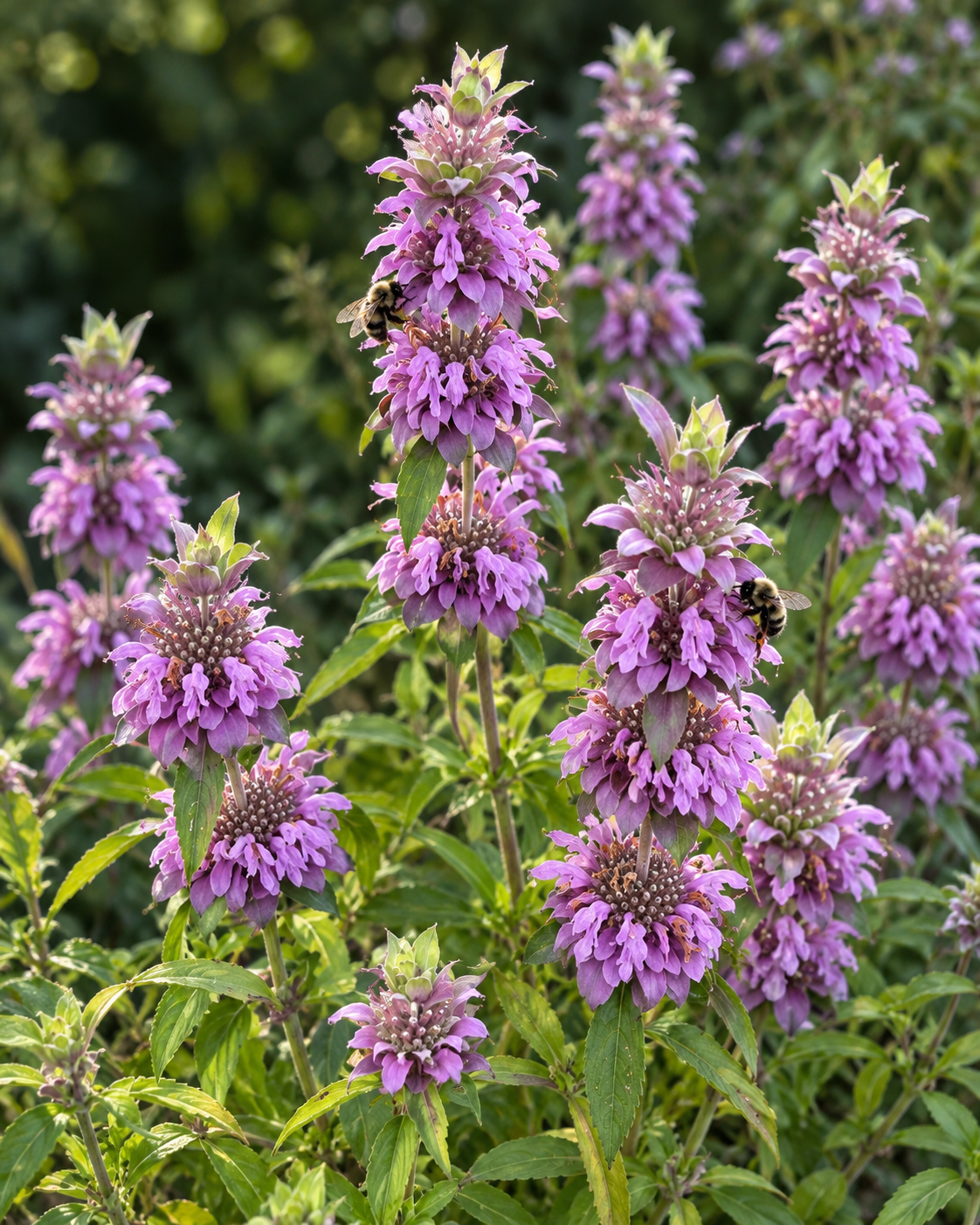
Monarda didyma—also known as scarlet beebalm or bergamot—is emerging as another fascinating botanical candidate.
A 2025 study combined laboratory experiments with a randomised, double-blind, placebo-controlled clinical trial. The human study included 81 adults aged between 45 and 65, who received either 100 mg of a formulated Monarda extract or a placebo each day for 12 weeks.
Participants receiving the Monarda extract showed an improvement in leukocyte telomere length and greater stability in measures of DNA methylation age. Improvements were also reported in aspects of physical quality of life, movement and sleep.
The accompanying laboratory work suggested several possible mechanisms. The extract demonstrated antioxidant activity, reduced oxidative DNA damage, slowed telomere shortening, decreased markers of cellular senescence and supported endothelial function.
This is particularly interesting because it suggests that Monarda may not act solely by stimulating telomerase. It may also help create a cellular environment in which telomeres are exposed to less oxidative and inflammatory damage.
The research is promising, but it remains a single pilot trial using a specific commercial extract developed in collaboration with an ingredient manufacturer. Replication by independent research groups will be essential.
Centella asiatica: supporting cellular resilience
Centella asiatica is already widely studied for wound repair, collagen organisation, vascular health and neurological function. Its possible relationship with telomere biology is much less established, but early experimental findings are intriguing.
A proprietary Centella extract known as DLBS1649 was tested in mammalian cells and in fruit flies. In cultured cells, the extract reduced the degree of telomere shortening over repeated cell passages and influenced the expression of several genes associated with ageing, including TERT, SIRT1, SIRT2 and Klotho. The extract also extended survival time in the fruit-fly model.
Another laboratory study examined a combination of Centella with pomegranate, sweet orange and Cistanche extracts. The botanical blend reduced telomere shortening in human dermal fibroblasts, including cells exposed to oxidative stress, and temporarily increased telomerase activity.
These findings indicate potential, but they do not yet demonstrate that Centella alone can lengthen telomeres in humans. At present, its telomere evidence should therefore be described as preclinical. Its relevance may lie in supporting broader cellular resilience through antioxidant defence, mitochondrial function, extracellular-matrix regulation and modulation of cellular senescence.
Epimedium: telomere protection without telomerase activation
Epimedium provides an especially interesting example because its effects may involve telomere protection rather than direct telomerase stimulation.
In an experimental study using ageing human diploid fibroblasts, an Epimedium flavonoid fraction extended the cells’ replicative lifespan and helped protect telomere length.
The researchers also observed reduced expression of the cell-cycle inhibitor p16 and changes in retinoblastoma protein signalling. Importantly, telomerase itself was not activated.
This distinction matters.
A substance does not necessarily need to stimulate telomerase to support telomere biology. It may instead reduce the oxidative stress, inflammation or cellular signalling disturbances that accelerate telomere attrition.
Scutellaria baicalensis and baicalin
Scutellaria baicalensis contains several flavonoids, including baicalin, baicalein and wogonin.
Baicalin has been studied in human skin fibroblasts exposed to ultraviolet A radiation—a form of cellular stress capable of promoting oxidative damage, DNA injury and premature cellular ageing.
In the untreated cells, UVA exposure shortened telomeres and increased markers associated with oxidative stress, DNA damage and cellular senescence.
Pretreatment with baicalin helped protect the cells against this telomere shortening. It also reduced oxidative damage and altered several ageing-associated signals, including p53, p16 and p66Shc.
This was a laboratory experiment rather than a human clinical trial. It does not demonstrate that taking Scutellaria orally—or applying it to the skin—will lengthen telomeres in people.
Nevertheless, the study provides useful mechanistic evidence that plant flavonoids may help preserve telomere integrity by protecting cells from environmental and oxidative stress.
Lengthening, protecting and maintaining are not the same thing
When discussing telomere research, it is important to distinguish between several different effects:
- Telomere lengthening: an increase in the measured length of telomeres.
- Reduced telomere shortening: slowing the rate at which telomeres are lost.
- Protection of short telomeres: reducing the proportion of critically short telomeres.
- Telomerase activation: increasing the activity of the enzyme that extends telomeres.
- Senescence modulation: influencing the signals that determine whether a cell continues dividing, enters senescence or undergoes cell death.
A plant compound may influence one of these processes without affecting the others.
This is why the emerging research should not be reduced to the question, “Does this herb make telomeres longer?”
A more useful question may be:
Can this botanical help preserve the cellular environment required for effective DNA protection, repair, communication and tissue renewal?
Is activating telomerase always beneficial?
Telomerase is essential in certain stem cells, reproductive cells and immune cells because these cells must continue dividing. However, telomerase activity is also used by many cancer cells to maintain their ability to replicate. Telomere lengthening or telomerase activation should therefore not automatically be interpreted as beneficial in every tissue or clinical context.
The objective of healthy-ageing research is not simply to make every cell divide indefinitely.
It is to understand how telomere maintenance can be appropriately regulated alongside DNA repair, immune surveillance, apoptosis, cellular senescence and normal tissue renewal.
What does the research tell us so far?
The strongest botanical evidence currently relates to specialised Astragalus-derived preparations, supported by several small human studies.
Monarda didyma has now produced encouraging results in a recent controlled human trial, although independent replication is needed.
Centella, Epimedium and Scutellaria baicalensis have demonstrated intriguing effects in laboratory and preclinical studies, particularly in relation to oxidative protection, cellular senescence and reduced telomere shortening.
Together, these findings suggest that medicinal plants may influence telomere biology through more than one pathway. Some may affect telomerase directly. Others may help protect DNA from oxidative stress, regulate inflammatory signalling, support mitochondrial function or reduce the premature transition of cells into senescence.
🌿 Key Takeaways
Telomeres help protect chromosome ends and contribute to genomic stability. Certain standardised Astragalus-derived extracts have increased measures of telomere length in small controlled human trials.
A recent study of a formulated Monarda didyma extract reported improved leukocyte telomere length after 12 weeks.
Centella, Epimedium and baicalin from Scutellaria baicalensis have shown telomere-related effects in laboratory or preclinical research.
Telomere lengthening, telomere protection and telomerase activation are different biological processes and should not be treated as interchangeable.
The evidence is promising, but it remains too early to translate these studies into general recommendations for ordinary herbal preparations.
🌱 A Herbalist’s Perspective
Medicinal plants rarely influence only one molecular target. Their potential value in healthy ageing may arise from their ability to interact with several connected processes at once: oxidative stress, inflammation, mitochondrial function, endothelial health, DNA protection, extracellular-matrix renewal and cellular senescence.
Telomeres provide one fascinating window into these wider effects. The emerging research does not yet offer a simple “telomere herb.” Instead, it invites us to investigate how carefully selected and properly standardised botanical compounds might help preserve the cellular organisation required for long-term tissue function and resilience. That is where the real scientific interest lies.
Educational disclaimer
This article is provided for educational purposes only and does not constitute medical advice. The studies discussed often used specialised or proprietary botanical extracts that are not equivalent to ordinary teas, tinctures, powders or supplements. Botanical medicines may interact with medication and may not be appropriate for everyone. Please consult a suitably qualified healthcare professional before beginning any new supplement or herbal preparation.
References
- Salvador L, Singaravelu G, Harley CB, et al. A natural product telomerase activator lengthens telomeres in humans: a randomized, double-blind and placebo-controlled study. Rejuvenation Research. 2016;19(6):478–484.
- de Jaeger C, Kruiskamp S, Voronska E, et al. A natural Astragalus-based nutritional supplement lengthens telomeres in a middle-aged population: a randomized, double-blind, placebo-controlled study. Nutrients. 2024;16(17):2963.
- Campisi M, Cannella L, Paccagnella O, et al. Unveiling the geroprotective potential of Monarda didyma L.: insights from in vitro studies and a randomized clinical trial on slowing biological aging and improving quality of life. GeroScience. 2025;47(3):4253–4290.
- Karsono AH, Tandrasasmita OM, Tjandrawinata RR. Potential antiaging effects of DLBS1649, a Centella asiatica bioactive extract. Clinical Interventions in Aging. 2021.
- Borras-Linares I, et al. In vitro determination of the skin anti-aging potential of a four-component plant-based ingredient. International Journal of Molecular Sciences. 2022.
- Zhang Z, et al. Experimental study on the effect of Epimedium flavonoids in protecting telomere length in senescent cells. 2005.
- Min W, Liu X, Qian Q, et al. Effects of baicalin against UVA-induced photoaging in skin fibroblasts. American Journal of Chinese Medicine. 2014;42(3):709–727.