Research in Focus
Can Adding a Banana to Your Berry Smoothie Reduce Its Nutritional Benefits?
Published: July 2026
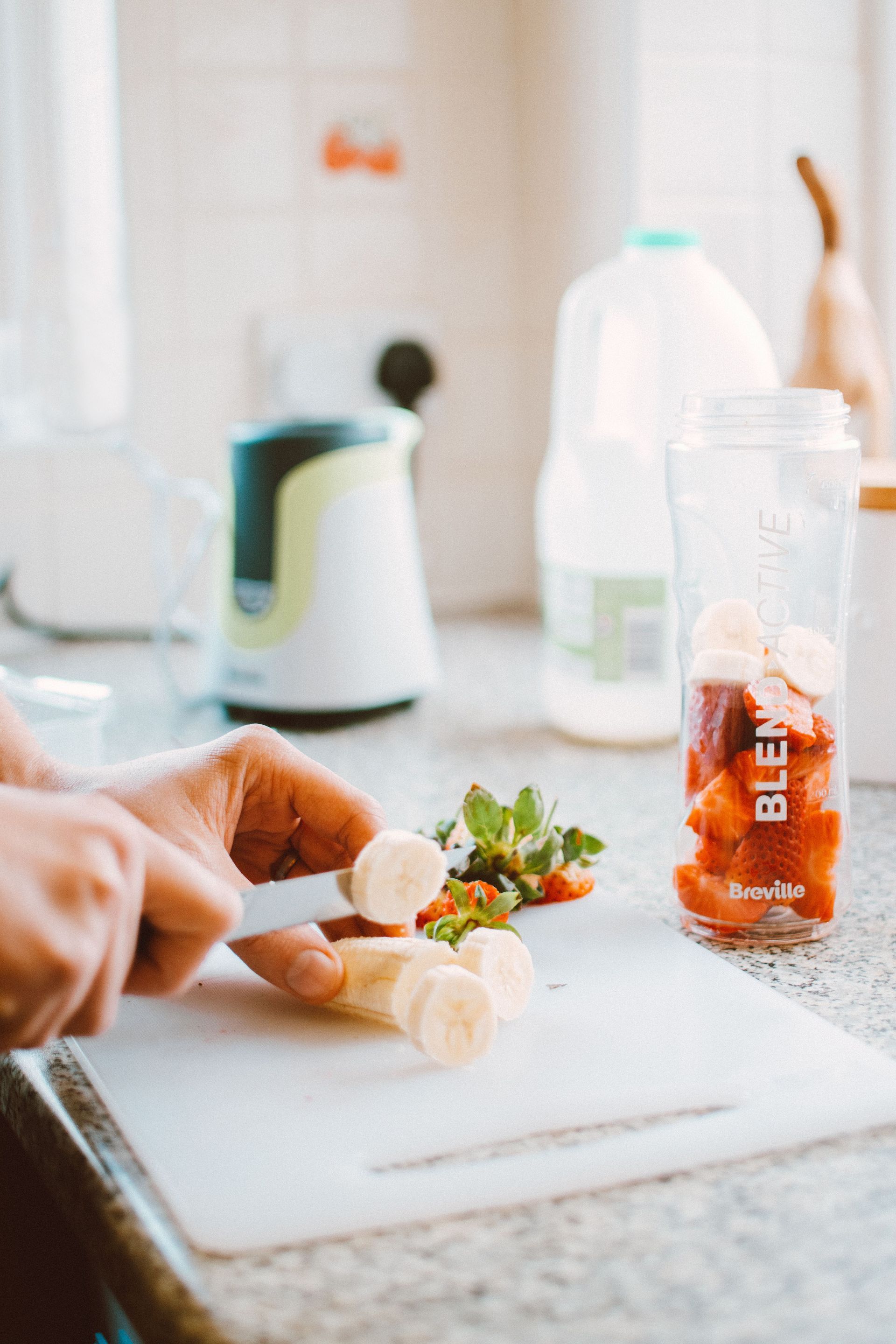
Smoothies are one of the simplest ways to increase our intake of fruit, and a combination of berries and banana has become a popular breakfast choice. But could the ingredients in a smoothie interact in ways that influence the nutrients our bodies absorb?
A recent study from researchers at the University of California, Davis suggests they might.
The findings highlight an important concept in nutritional science:
food is not simply a collection of individual nutrients. The way foods are prepared and combined can influence how those nutrients behave within the body.
The Research
Researchers investigated whether adding banana to a berry smoothie affected the absorption of
flavanols—naturally occurring plant compounds associated with cardiovascular and cognitive health.
The study was published in the peer-reviewed journal
Food & Function.
Participants consumed:
- a mixed berry smoothie
- a banana-based smoothie
- a flavanol capsule (used as a control)
Blood and urine samples were then analysed to determine how much of the flavanols became available for absorption.
What Are Flavanols?
Flavanols belong to a group of plant compounds known as
polyphenols.
They are naturally present in foods including:
- blueberries
- blackberries
- grapes
- apples
- pears
- cocoa
- tea
Over the past two decades, flavanols have been extensively studied for their potential role in supporting:
- endothelial function
- healthy blood flow
- cardiovascular health
- healthy blood pressure
- cognitive function
- healthy ageing
Although research continues, dietary guidelines from the Academy of Nutrition and Dietetics suggest that consuming flavanol-rich foods may contribute to cardiometabolic health.
The Surprising Finding
The researchers observed that when banana was included in the smoothie, the measured availability of flavanols was substantially reduced compared with the control.
Why?
The answer appears to lie in an enzyme called
polyphenol oxidase (PPO).
Understanding Polyphenol Oxidase
Polyphenol oxidase is a naturally occurring enzyme found in many fruits and vegetables.
It is responsible for the familiar browning that occurs when fruits such as bananas or apples are cut and exposed to air.
Researchers believe that this enzyme can also react with flavanols, altering their chemical structure and reducing the amount that remains available for absorption.
Interestingly, the reduction in flavanol availability was observed even when flavanols and banana were consumed together but prevented from mixing before ingestion. This suggests that PPO activity may continue after consumption, possibly within the stomach.
Does This Mean Bananas Are Unhealthy?
Absolutely not.
Bananas remain an excellent source of:
- potassium
- vitamin B6
- dietary fibre
- carbohydrates that provide readily available energy
They continue to be an important component of a balanced diet.
Rather than suggesting bananas should be avoided, this research simply indicates that
if your specific goal is to maximise flavanol intake from berries, grapes or cocoa, bananas may not be the ideal ingredient to combine with them.
Practical Implications
If your smoothie is intended to increase flavanol intake, researchers suggest pairing berries with ingredients that have relatively low polyphenol oxidase activity, such as:
- mango
- pineapple
- oranges
- natural yoghurt
Bananas can still be enjoyed separately or included in smoothies where flavanol preservation is not the primary objective.
Looking Beyond Smoothies
Perhaps the most interesting aspect of this research extends beyond bananas and berries.
It reminds us that
nutrition is dynamic.
Foods do not simply contribute individual nutrients independently. They interact with one another through complex chemical and biological processes that may influence digestion, absorption and metabolism.
As nutritional science evolves, researchers are increasingly recognising that these interactions can be just as important as the nutrients themselves.
For clinicians, nutritionists and herbal practitioners alike, this reinforces the importance of considering the whole dietary pattern rather than isolated foods or individual nutrients.
How Strong Is the Evidence?
This study was carefully designed as a controlled crossover trial, allowing each participant to act as their own control.
However, several important limitations should be recognised.
The study involved a relatively small number of healthy volunteers, meaning larger studies will be needed to confirm these findings across broader populations.
In addition, the research focused specifically on flavanol bioavailability rather than long-term clinical outcomes such as cardiovascular disease or cognitive performance.
Consequently, these findings should be interpreted as an important contribution to our understanding of food interactions rather than a reason to avoid bananas.
A Herbalist's Perspective
Medicinal plants have always been used as complex mixtures of hundreds of naturally occurring compounds rather than isolated chemicals.
Modern nutrition is beginning to reveal a similar principle.
Health depends not only on what we consume, but also on
how different foods interact within the body's intricate biological systems.
This study provides a fascinating reminder that nutrition is more than the sum of its individual ingredients. Understanding these interactions may help us make more informed choices about the foods we eat while appreciating the remarkable complexity of human physiology.
Key Takeaways
- Bananas remain a highly nutritious food.
- Bananas naturally contain high levels of polyphenol oxidase (PPO).
- PPO may reduce the bioavailability of flavanols when combined with berries.
- If your goal is to maximise flavanol intake, consider pairing berries with lower-PPO ingredients such as mango, pineapple, oranges or yoghurt.
- The study was well designed but relatively small, and further research is needed.
- Food combinations may influence nutrient absorption, reminding us that nutrition is about interactions as well as ingredients.
References
Ottaviani JI, Ensunsa JL, Fong RY, Kimball J, Medici V, Kuhnle GGC, Crozier A, Schroeter H, Kwik-Uribe C. Impact of polyphenol oxidase on the bioavailability of flavan-3-ols in fruit smoothies: a controlled, single-blinded, cross-over study. Food & Function. 2023;14(18):8217–8228.
https://doi.org/10.1039/D3FO01599H
University of California, Davis. Surprising research reveals why you shouldn't add bananas to your smoothies. ScienceDaily. 24 May 2026.
Important Information
This article is provided for educational and informational purposes only and is intended to support a better understanding of current scientific research. It should not be interpreted as medical advice, nor should it replace an individual consultation with a qualified healthcare professional.
Nutritional needs and health conditions vary from person to person. Decisions regarding diet, supplements, medications or medical treatment should always be made in consultation with your GP, specialist or other appropriately qualified healthcare practitioner.
The research discussed represents the findings of a single scientific study and should be considered within the context of the wider body of evidence. Scientific understanding continues to evolve, and future research may expand or refine these findings.